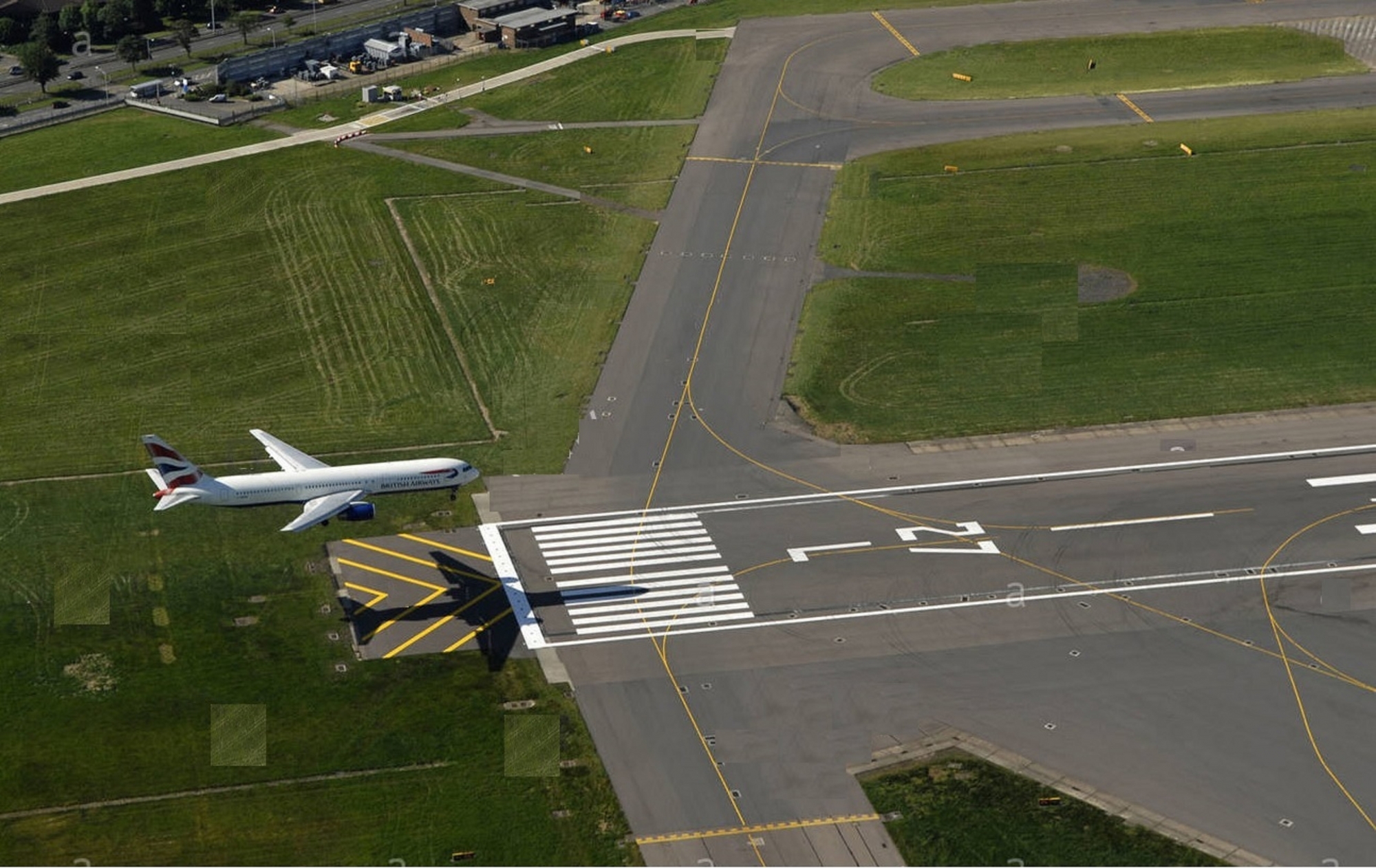
Have you ever wondered why all runways used for take-offs and landings of aircraft are numbered? What is the significance of these numbers and are they just numbered randomly?
Actually, the numbers signify the name for every runway, and it is important in helping the Pilot's determine which runway to use. This becomes critical for the Pilot to know at airports with more than one parallel runway used for both takeoff's and landing's.
How are the runway numbers determined?
Runway numbers are determined as per their direction (degrees) on the compass. Each number matches a compass direction, determined by the angle of the arc on the horizon. Every runway is numbered between 01 & 36. The difference in compass reading and airport runway numbers is that compass readings may be in 3 digits, while runway numbers are in 2 digits.
At airports that have parallel runways, they are given a letter designation to indicate left, center and right. For example, runway 28L, 28R to indicate if the exact runway location is on the left or on the right. Aircrafts may land and takeoff in the same direction, depending on the prevailing wind direction. The same runways are often used from either direction, depending on the weather conditions and wind direction.
Are all runways of the same length?
The length of runways, in terms of usability for airline operations is determined by the types of aircraft that the airport will handle. Usually, a runway of at least 6,000 feet in length is adequate for average aircraft weights (below approximately 90,000 kg).
Thus, the various types of aircraft have different power/weight ratios that determine how much runway they need when landing, and how quickly they can be airborne at takeoff. As an example, the takeoff runway length requirement for the Airbus A380, which is currently the largest commercial passenger airplane, is approximately 2900 meters or 9500 feet.
I hope on your next flight while you are comfortably tucked in your seat, and have the opportunity to look out at the various markings on the taxiway/runway, you will feel a bit knowledgeable about which direction you might be taking off or landing. Safe travel!
CAE today announced that it has concluded a conditional agreement with Textron (NYSE: TXT) to acquire TRU Simulation + Training Canada Inc. (TRU Canada) for a cash consideration of approximately US$40...
【Commitee】【Hosted by】Civil Aircraft Operation Support Technology Sub-committee of CSAAShanghai Society of Aeronautics 【Organized by】Qingdao Airlines Co.,LtdTaikoo (Shandong) Aircraft Enginee...
Join Dr. Adnan Baranbo in the 21th Episode of AVIAPRENEURS talking about Aviation Fuel Digital Procurement featuring The Founder and President of Fuelerlinx, Mr. Kevin Moller.Mr. Kevin Moller, an...
While Qatar Airways is proudly celebrating its 500K followers, let's focus on more reasonable reach. Which Instagram Strategy Soared Highest this Summer? At Branding pass we focused on this case study...
Dr. Adnan Branbo’s guest on the 2nd episode of AVIAPRENEURS is the courageous Captain Nuno Pereira, an aviation expert, and the CEO of Bestfly. Captain Nuno Pereira’s aviation journey is a story ab...
Things just keep getting busier at Dubai, the Pearl City of the Gulf. Dubai International (DXB) welcomed over 36.9 million passengers at DXB in the first five months of this year. The&n...