



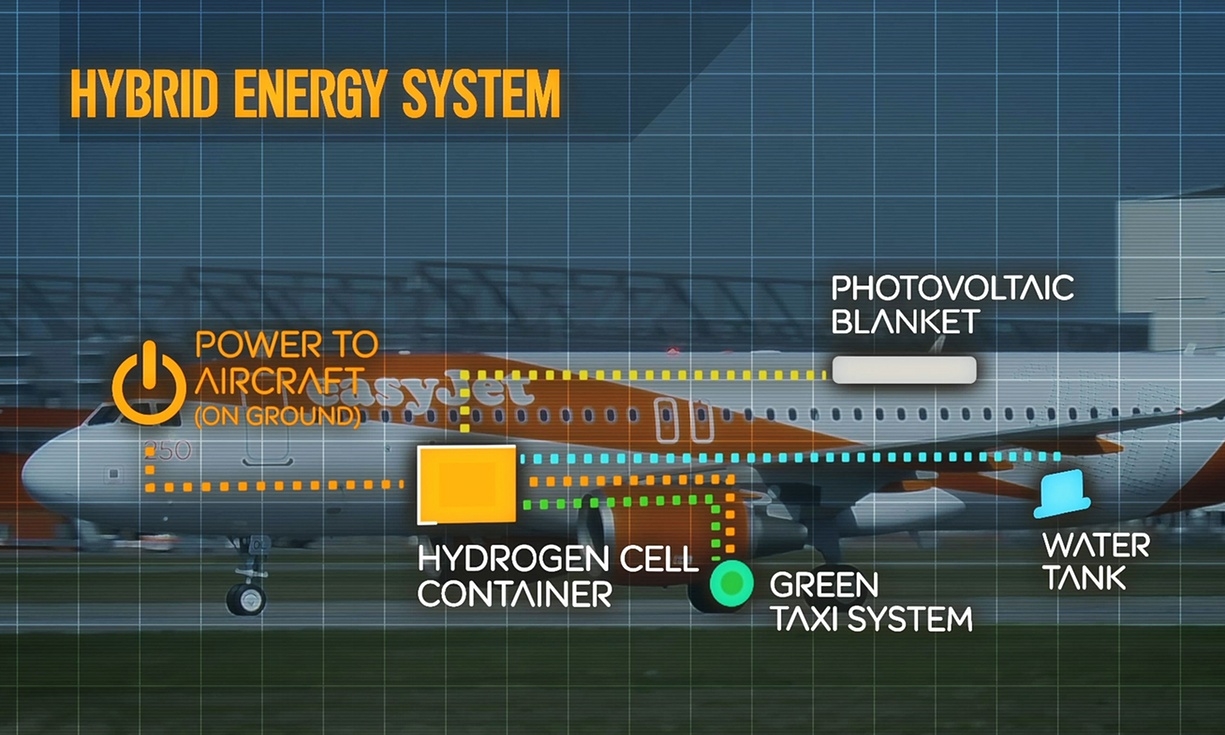
EasyJet has unveiled plans to use hydrogen fuel cells on its aircraft to save up to 50,000 tonnes of fuel a year and cut its carbon emissions.
The airline hopes to trial technology later this year that would allow planes to taxi to and from the runway using zero-emissions fuel.
Around 4% of easyJet’s total fuel consumption is used in taxiing, or an average of 20 minutes a flight.
While aviation’s progress in developing sustainable alternatives to jet fuel has been minimal, the industry is hoping to reduce its carbon footprint with more efficient aircraft, improved air traffic control and initiatives such as easyJet’s at airports.
EasyJet’s “hybrid plane” would use a hydrogen fuel cell stowed in the aircraft’s hold, which would capture energy generated by brakes on landing and could charge the system’s lightweight batteries on the ground – a similar system to one developed in Formula 1 cars.
Instead of relying on tug vehicles to manoeuvre planes in and out of airport stands, the aircraft would use electric motors in their main wheels when taxiing, which easyJet said should also improve operations and punctuality.
EasyJet has targeted a 7% cut in its CO2 emissions (currently 81 grams a passenger kilometre) by 2020, and claims its relatively young fleet and full planes already mean its passengers have a significantly lower carbon footprint than traditional, full-service airlines.
The airline’s head of engineering, Ian Davies, said: “We are continuing to apply the use of new digital and engineering technologies across the airline. The hybrid plane concept we are announcing today is both a vision of the future and a challenge to our partners and suppliers to continue to push the boundaries towards reducing our carbon emissions.”
The design came from a competition run with Cranfield University to come up with ideas for aircraft of the future, although easyJet has pledged to trial the cell this year.
In a 2008 test conducted by Boeing, a light plane flew a short distance using hydrogen fuel cells.
Phenix Jet Cayman has added a Bombardier Global 8000 to its managed fleet, successfully completing the aircraft's CAACI registration transfer and entry into service in less than five business days...
The Board of Directors of Costruzioni Aeronautiche Tecnam S.p.A. has unanimously appointed Giovanni Pascale Langer as Chief Executive Officer, while Paolo Pascale Langer, who...
Airbus forecasts that demand for aviation services will more than double between 2026 and 2045, exceeding US$420 billion in value. Driven by a compound annual growth rate (CAGR) of 3.8%, the sector wi...
Airbus has secured 21.J Civil Design Organisation Approval from Australia’s Civil Aviation Safety Authority (CASA), marking a significant milestone for its local operations and enhancing its abi...

