



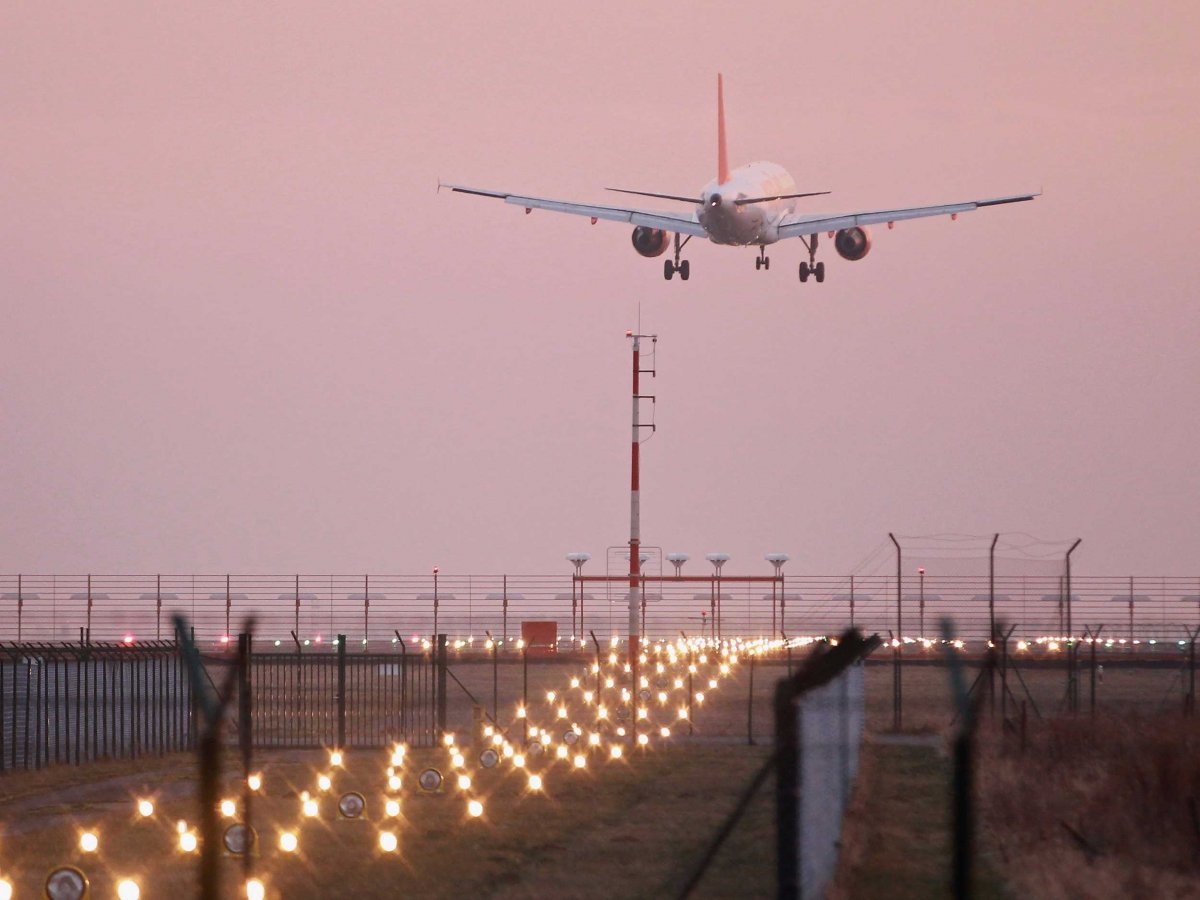
More than 200 landing approaches made by commercial airliners over the past 15 years prompted cockpit emergency collision warnings -- the last possible alert before a crash -- yet most of the incidents weren't reported by pilots, according to global data collected by Honeywell International Inc.
The hazardous approaches made up a minute portion of the more than 20 million analyzed flights and none resulted in a crash, even though some pilots pulled up at the last instant. But the numbers indicate that premature descents and associated navigation errors, which were the most common cause of crashes in previous decades, haven't been eliminated, even as overall accident rates reach record lows.
In recent years, onboard safety systems developed by Honeywell and now made by several others have helped to largely eliminate commercial accidents stemming from such cockpit slip-ups in Western jets, experts inside and outside Honeywell say. The data, which Honeywell says it hadn't previously disclosed partly to avoid antagonizing pilot unions, don't break out specific airlines or even regions where the hazardous incidents occurred.
Out of nearly 24.4 million flights between 2000 and 2015 that Honeywell analyzed, the company found 224 so-called premature descent events: when planes were heading for runways, but pilots received computer-generated verbal warnings to "pull up, pull up." Crews either adjusted their trajectories, or abandoned the approaches.
The incidents "were mostly unreported by pilots or [air-traffic] controllers," according to a summary document provided by the company.
Pilot groups have "worked tirelessly with other industry bodies, over many years, to address the challenges posed" by such incidents, said Martin Chalk, president of the International Federation of Air Line Pilots' Associations. He added that "under reporting of significant events" remains a problem, which is "not helped by either punitive or apathetic responses" from carriers or regulators.
Nearly all of the dangerous approaches were flown without the benefit of sophisticated ground-based navigation aids, like those installed at major airports throughout the U.S., Europe and other regions with mature aviation industries.
Many more such dangerous approaches are believed to occur than are formally reported and investigated by government regulators or safety agencies, veteran Honeywell safety expert Don Bateman said.
Mr. Bateman, who in the 1990s led development of the advanced safety devices -- called enhanced ground-proximity warning systems -- said in an interview that "pilots tend to very quickly recover" when they get such a dramatic warning on approach. "They get the heck out of there, in a hurry."
Robert Francis, a former vice chairman of the U.S. National Transportation Safety Board, said the data "absolutely represents a tribute to the system" of safety technologies provided by various suppliers. "It shows things are working" as intended, he said, "and flight crews are trained to react almost instantaneously."
A decade ago, "controlled flight into terrain" accidents -- when pilots lose track of their location or surroundings -- accounted for 25% of fatal commercial crashes. In 2014, they accounted for roughly 2% of all accidents and about 13% of fatalities world-wide, according to statistics assembled by the aviation arm of the United Nations. The lifesaving technology is installed on more than 55,000 commercial and military aircraft.
Honeywell gathers incident data whenever ground-collision warning devices are returned for service, upgrade or repair.
"Most pilots don't realize the data is there" to be harvested, Mr. Bateman said. Honeywell says it has gone to great lengths to reassure pilot unions that their goal isn't to identify or punish crews that made mistakes.
Over the years, Honeywell has used the information to revise databases by correcting errors involving terrain features, as well as adjusting the height and position of other natural and man-made obstacles shown in navigation systems. More recently, the data have been used to document safety trends and to show that timely warnings -- combined with enhanced awareness and simulator training for pilots -- can prevent deadly crashes.
AEE Aircraft Electronic Engineering GmbH and Horizon Aircraft have joined forces to integrate advanced avionics capabilities into the Cavorite X7 hybrid-electric eVTOL programme. Throug...
Air Tahiti has received a new ATR 72-600 equipped with ATR’s HighLine All-Business Class cabin, becoming only the second airline worldwide to introduce this premium configuration on an ATR aircr...
Desert Jet has broken ground on its long-planned ramp expansion at Jacqueline Cochran Regional Airport (KTRM), advancing a key infrastructure investment designed to accommodate rising business av...
Phenix Jet Cayman has added a Bombardier Global 8000 to its managed fleet, successfully completing the aircraft's CAACI registration transfer and entry into service in less than five business days...

