



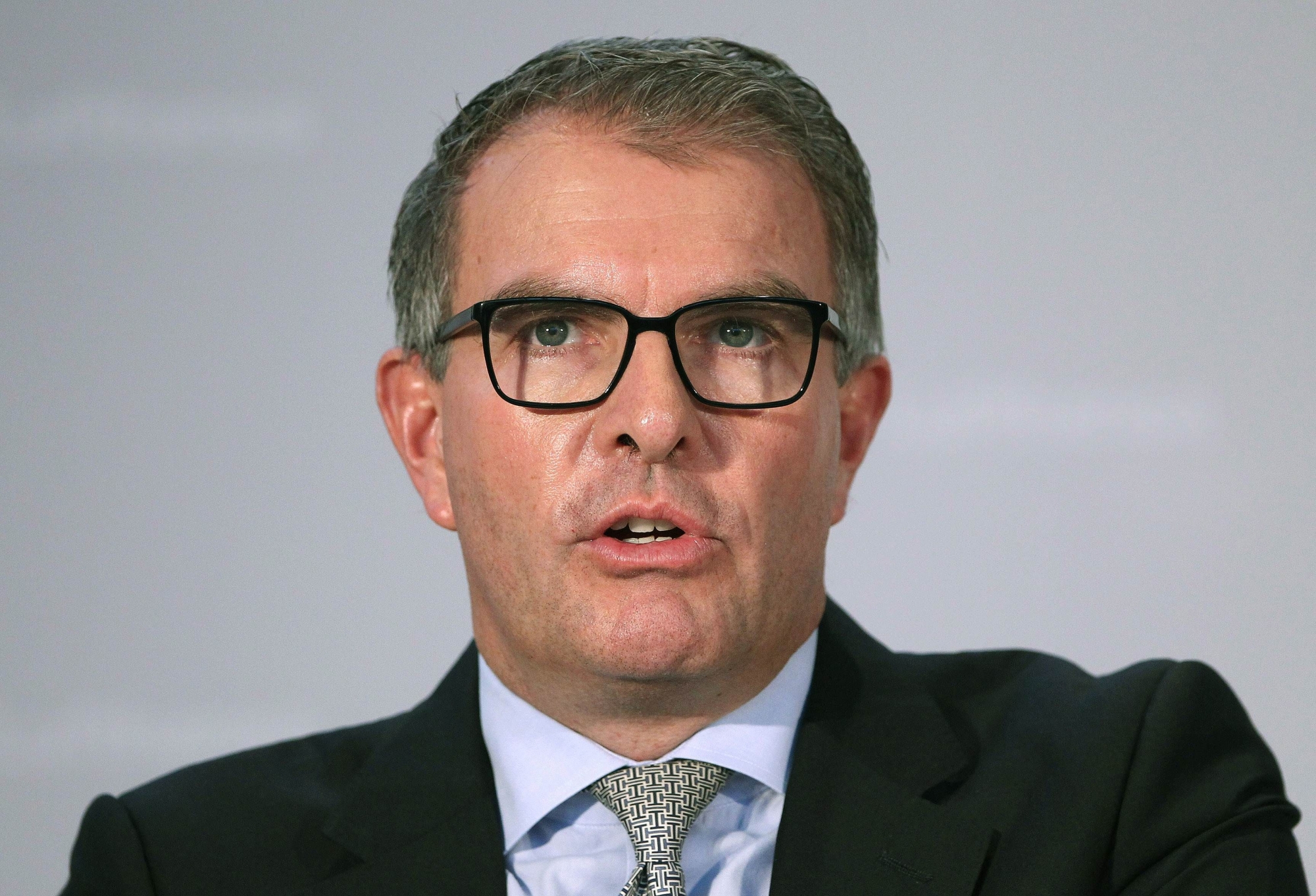
"Our pilots are a very important part of our safety network, they are not a threat to safety - they are guaranteeing safety in aviation."
That is the forthright response from Lufthansa Group's chief executive, Carsten Spohr, when asked about the company's reaction to the loss of Germanwings flight 9525, a year ago.
Last March the aircraft crashed into a mountainside in southern France.
All 150 passengers and crew were killed.
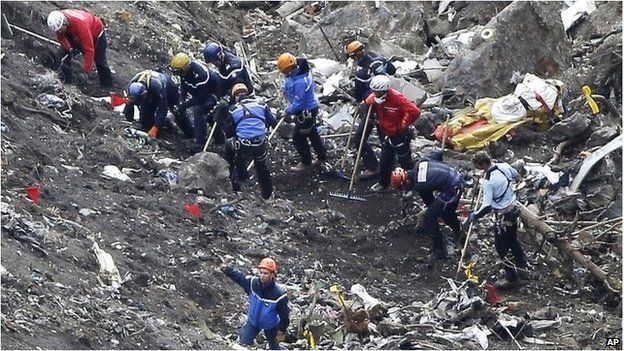
Image copyrightAP
Image captionThe plane was en route from Barcelona to Duesseldorf when the crash occurred
Investigations showed that the aircraft had been brought down deliberately by its co-pilot, Andreas Lubitz. It later emerged that he had suffered from severe depression in the past.
Prosecutors also said that at the time of the accident he had been suffering from "an illness", which he had concealed from his employer and colleagues - and had destroyed sick notes excusing him from duty.
In the wake of the accident, Lufthansa faced criticism for allowing Mr Lubitz to fly. However, Mr Spohr - himself a qualified airline pilot - says that even with the benefit of hindsight, he doesn't believe the company did anything wrong.
"I think we've seen in this very tragic accident, one of the few examples in our industry where no significant change of procedures, of engineering came from what we learned, which makes it even more tragic in a way", he says.
"We have looked with government bodies into cockpit access procedures, into medical screening of pilots, and basically we found that Lufthansa has been doing it right."
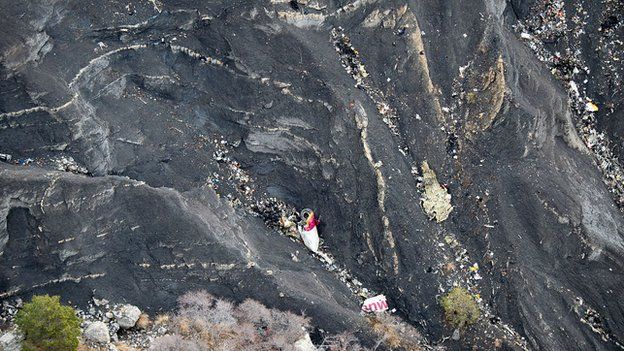
Image copyrightGetty Images
Image captionDebris from the crash is scattered over a wide area near Seyne-les-Alpes
Some changes have been made at industry level - for example the European Aviation Safety Agency now recommends that no pilot is ever left alone in the cockpit, and further talks about "optimising" cockpit procedures are still going on.
And Mr Spohr thinks the right decisions will be taken.
"It's our promise to any victim in any accident that we put all our effort as an industry into making flying ever safer", he says.
Bumper profits, record strikes
The crash overshadowed what was, on paper at least, a successful year for Lufthansa in 2015.
Passenger numbers were up across the group, and profits are expected to total more than €1.5bn ($1.7bn; £1.18bn). The low price of oil has helped, by significantly reducing its fuel bill.
But at the same time, the group has endured a fractious relationship with pilots, cabin crew and ground staff.
It is attempting to cut costs, and expand its budget subsidiary Eurowings, which is taking over some long haul routes, as well as developing its European network.
Its plans have antagonised unions - and the company endured a series of damaging strikes, including one that lasted a week and forced thousands of flights to be cancelled.
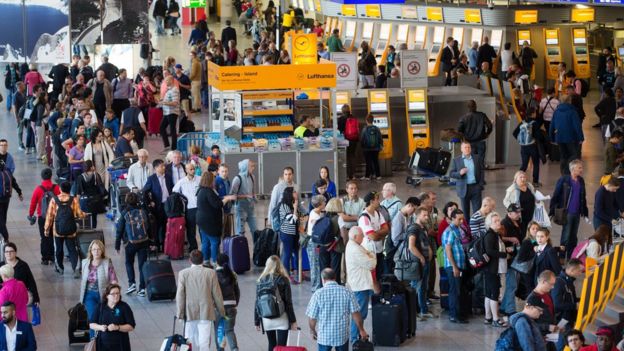
Image copyrightGetty Images
Image captionPassengers grounded during the Lufthansa pilots' strike in September last year
Lufthansa says that over the past two years, strikes have cost the airline more than $500m (£347m). But Mr Spohr thinks it has been a necessary sacrifice.
"Some of the structures we have at Lufthansa are from the days of state ownership. So these 30 or 40 year-old structures are just not fitting us for the future.
"There's resistance, obviously. Is this a perfect time to overcome such resistance, when we're making record profits? No.
"But I think we've waited too long already, so I think it's now time to make Lufthansa fit for growth again.
"If we don't take the pain now, the pain is just getting bigger and it has to be taken sometime in the future. So it doesn't pay off to defer it."
But can agreement ever be reached? Mr Spohr clearly thinks so.
"I know my staff love their company as much as I do", he says with a wry smile.
I'm sure there's a joint interest, we just haven't managed to find the right compromise yet. I'm very positive we will."
EVIA AERO and Fabspace Hangars are addressing one of aviation’s most pressing infrastructure challenges: the shortage of hangar capacity across Europe. Through their partnership, EVIA AERO now o...
From Learjets and Challengers to turboprops such as the Pilatus PC-12, different aircraft bring different capabilities to a medical flight. Sebastian Demiet, COO of MTI 24/7, explains why aircraft sel...
Desert Jet has broken ground on its long-planned ramp expansion at Jacqueline Cochran Regional Airport (KTRM), advancing a key infrastructure investment designed to accommodate rising business av...
Information Design One AG, the Frankfurt-based aviation technology company behind the aFuel platform, has achieved a major operational milestone. During the first half of 2026, aFuel processed 50...

