



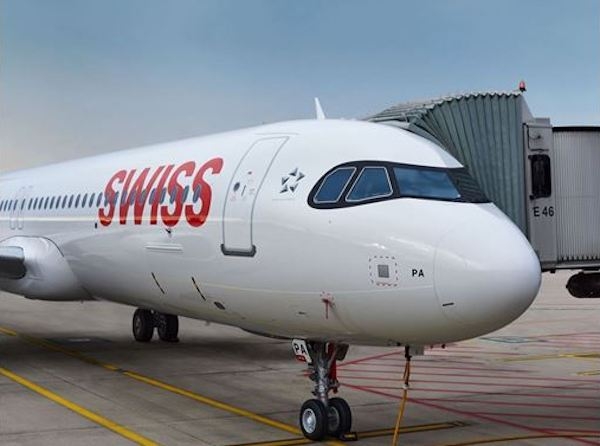
2023 summer travel season posed sizeable challenges for SWISS and its employees. Strikes, thunderstorms and Europe-wide staffing shortages – of air traffic controllers in particular – all added to the task. SWISS is pleased to report that it transported 1.7 million travellers in the 2023 summer holiday period. In operational terms, however, the summer season saw mixed results. Conservative planning enabled the company to perform some 99 per cent of its flights as scheduled and fly its customers reliably to their destinations. At the same time, though, SWISS and its summer operations experienced numerous delays, which were largely attributable to external factors such as adverse weather conditions and personnel shortages at its partner companies.
The general operating conditions which were faced by SWISS in this year’s summer holiday season were very challenging. An unusually high incidence of adverse ‘bise’ wind conditions, strike actions in various European countries and shortages of staff – and of air traffic controllers in particular – significantly impaired the company’s flight operations. To counter these challenges and maintain stable flight schedules, SWISS resolved to offer no more than about 85 per cent of its pre-pandemic capacities, with the overriding aim of ensuring schedule reliability.
Oliver Buchhofer, SWISS’s Head of Operations, commented: "We also built cushions into our system, by rostering more reserve crews and providing reserve aircraft,” explains Oliver Buchhofer, SWISS’s Head of Operations. “And our actions paid off: our flight operations remained exceptionally stable throughout the summer holiday period. This had been our paramount objective, and it’s a goal we achieved.” SWISS’s schedule stability for the summer holiday period from mid-July to mid-August amounted to 98.9 per cent, meaning that the vast majority of the company’s flights were operated as scheduled. “We were, in fact, one of Europe’s stablest airlines,” Oliver Buchhofer adds.
1.7 million passengers carried
This year, too, the demand for air travel was very high throughout the summer holiday season. Over the past four weeks, SWISS operated 12,870 flights transporting a total of some 1.7 million passengers. The peak travel day was Friday 28 July with just under 60,000 SWISS travellers.
Oliver Buchhofer, SWISS’s Head of Operations said: “We achieved our intermediate goal of offering our passengers flight services that were as reliable as possible. And I’m hugely grateful for the outstanding performance that our employees delivered over the past few weeks. As a Swiss airline, we aspire to be punctual, too,” he continues. “And this is an aim that we didn’t achieve. We must improve here. And we’re already learning our lessons for summer 2024, and have already embarked on close consultations with our partners to this end.”
A positive punctuality trend
As a result of its current clear and consistent focus on offering its customers a stable air travel product (including operating flights with delays, too, where necessary), SWISS’s punctuality performance for this summer fell short of its objectives. At 56.7 per cent, just over half of the company’s flights over the past four weeks arrived punctually at their destination. 25.3 per cent of them arrived with more than 30 minutes delay. The delays concerned were mostly attributable to external factors such as adverse weather conditions (and resulting suspensions of ground handling activities), substantial reductions in Zurich Airport’s arrival and departure capacities in easterly ‘bise’ wind conditions and staffing shortages within Europe’s air traffic control. SWISS’s punctuality did show a renewed upward trend in the first weeks of August, however. And its employees continue to do their utmost, on the ground and in the air, to get travellers to their destinations as planned. They have been helped here, too, by both a decline in the volumes of European strike actions and a tangible stabilization in general weather conditions.
Embraer and LATAM Airlines Group have signed a Component Pool Program agreement to support the airline's introduction of 24 Embraer E195-E2 aircraft. In addition to the firm order, LATAM retains o...
When a vehicle assembly line is at risk of running out of critical components, every minute of downtime carries a significant cost. In many cases, an emergency air charter is not the expensive option,...
HondaJet Classic and APMG operators across the European Union can now access the latest enhancements developed for the HondaJet family following the European Union Aviation Safety Agency’s valid...
EVIA AERO and Fabspace Hangars are addressing one of aviation’s most pressing infrastructure challenges: the shortage of hangar capacity across Europe. Through their partnership, EVIA AERO now o...

