



Global air traffic is set to surge from 4.5 billion today to 22.3 billion passengers annually by 2053, according to ACI World. Meeting this growth won’t just require bigger terminals—it will demand smarter, multimodal, seamless airports built around efficiency, personalisation, and sustainability.
Max Groot of Momberger Airport Information stated: “The airport of tomorrow should bring back the relaxed ease of pre-9/11 travel, while using biometrics and automation to make processes almost invisible. Passengers can expect stress-free terminals, seamless movement and sustainability built into every stage of the journey.”
Biometric technology is already reshaping the passenger journey. Earlier this year Zayed International Airport in Abu Dhabi was hailed as the first international airport to introduce biometric identification at nine touchpoints—from check-in to boarding. This eliminates the need for paper documents and slashes wait times.
Baggage handling is also evolving. GPS-tracked luggage, off-site drop points, and automated systems will steadily become the norm reducing errors and anxiety for passengers. As SITA CEO David Lavorel notes, “Baggage must move with the same speed and reliability as passengers themselves.”
Automation is redefining the terminal experience. From robotic assistants like Munich Airport’s JEEVES snackbot, which was trialled last year, to AI-powered kiosks and virtual concierges, the future terminal will be intelligent and intuitive. Augmented Reality (AR) tools will offer real-time navigation and translation via wearables or smartphones.
Sustainability will also define the airport of tomorrow. Future terminals will double as “enerports”, generating their own solar power and hydrogen fuelling services. Meanwhile, rainwater harvesting, electric ground vehicles, biophilic design and even vertical gardens, such as those at Kempegowda International Airport in Bangalore, will create greener, more calming environments.
Comfort will rival that of luxury hotels. Passengers can expect the wider roll out of personalised services, quiet zones, spa areas, virtual reality (VR) games rooms and flexible seating arrangements. AI systems will manage disruptions in real-time, rebooking flights or redirecting passengers automatically.
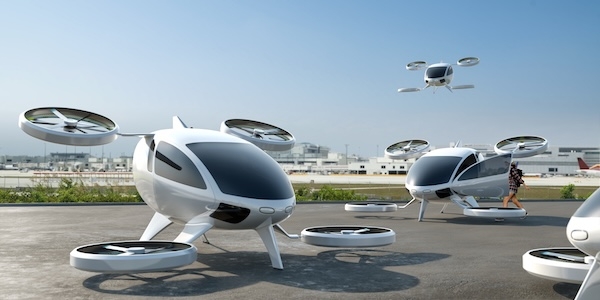
Looking ahead, airports will evolve into multimodal mobility hubs—integrating high-speed rail, autonomous vehicles, and vertiports for electric air taxis. These "aerotropoli" will become destinations in their own right, blending travel, commerce, leisure and innovation.
Poland’s multimodal Centralny Port Komunikacyjny (CPK), due to open in 2032, exemplifies this future. Passengers will check in online, upload documents, and use biometrics throughout their journey—no passports, no boarding passes, just a facial scan. “CPK is being designed from the outset to evolve naturally into the airport of the future – an environment where convenience, security and efficiency are seamlessly combined,” concludes Dariusz Kuś – CPK’s Board Member for Airport Investments.
The airport of the future won’t just move people—it will move with them. Seamless, sustainable, and smart, the transformation has already begun. Celebrating 25 years of driving airport innovation and global partnerships, this year’s inter airport Europe (7-9 October in Munich) provides the ideal platform to showcase and shape the next era of aviation.
Air France has announced the first additions to its Summer 2027 schedule, strengthening its North American network with the launch of new nonstop services to Nashville, Tennessee, and San Diego, Calif...
AeronautX, part of the AX Aero Group, has announced the launch of a new business aviation pilot training centre in Amsterdam, scheduled to open in the first quarter of 2027. Created by business a...
HondaJet Classic and APMG operators across the European Union can now access the latest enhancements developed for the HondaJet family following the European Union Aviation Safety Agency’s valid...
Deutsche Aircraft is advancing the next chapter of regional aircraft manufacturing in Europe with the construction of a new production facility at Leipzig/Halle Airport. To support the site's...

