



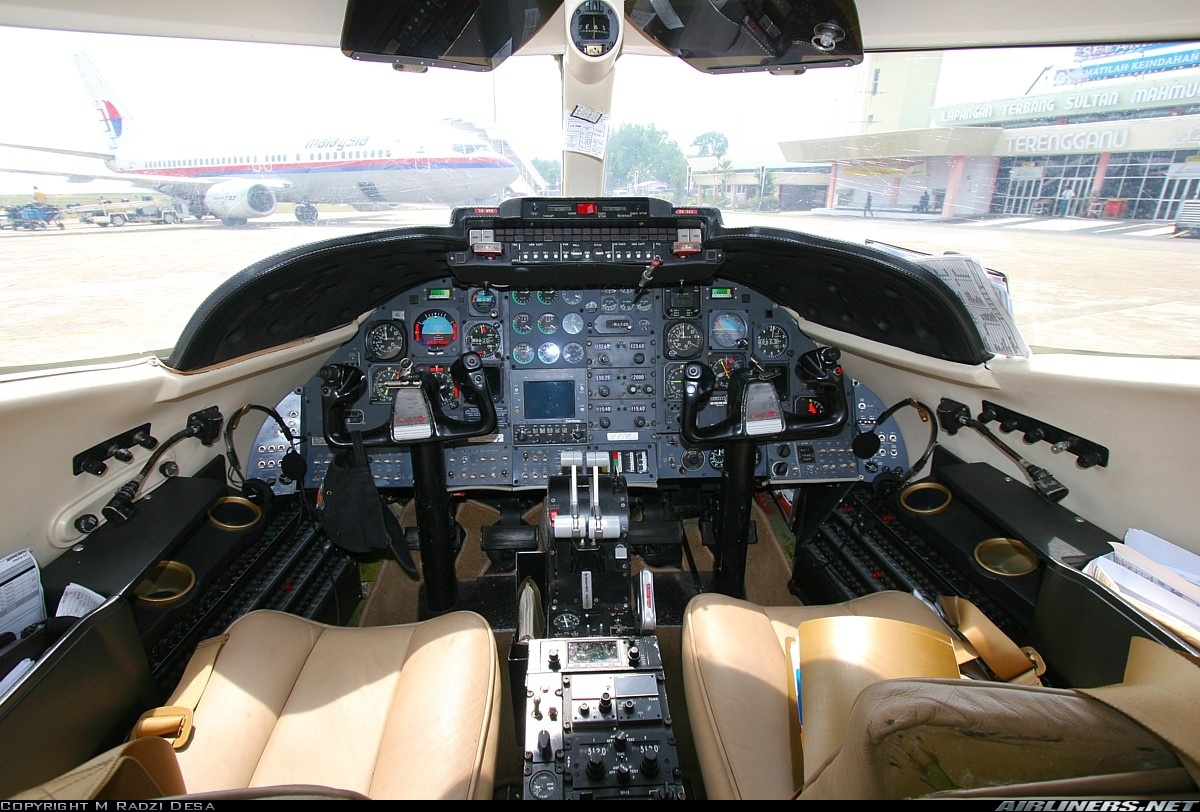
The NTSB discovered several irregularities and crew-performance failures in its investigation of the fatal crash of a Mexican-registered Learjet 35A on Nov. 19, 2013, according to the recently published factual report. Both pilots, a physician, and a flight nurse died when the aircraft plunged into the Atlantic Ocean following a loss of control during an emergency return after takeoff from Fort Lauderdale, Fla. The mission was a repositioning flight back to its base in Cozumel, Mexico. Night VMC prevailed and an IFR flight plan was filed.
Shortly after takeoff the copilot asked ATC for vectors to return due to an “engine failure.” Although the copilot acknowledged numerous controller directions, the aircraft kept making tighter turns while descending. Two minutes later, the copilot declared “mayday” and said the airplane was “two hundred feet over the sea.” After that, communications with the airplane were lost.
According to conversations recorded on the CVR, no checklists were used from the beginning to the end of the flight. Additionally, there was no crew coordination. The pilot asked the copilot for unspecified “help” because he did not “know what's going on.” At no time did the copilot identify a specific emergency, and he did not provide any assistance to the pilot.
Training, flight time and certification records revealed unsubstantiated information. There was no evidence that the copilot completed any training or practical tests in a Learjet airplane or flight simulator. Some of the captain’s declared experience and certifications were based on logbooks never presented, and copies of required documents were not properly certified by the Government of Mexico.
Photographs of the submerged wreckage showed that the left engine's thrust reverser was not in the stowed position. According to FDR information, about 100 seconds after takeoff, the left engine computer sensed a drop in engine speed. It continued to decline until the weight on wheels sensor transitioned from “in air” to “on ground,” possibly unlocking the reverser. But after about a 35-second decrease, engine speed values returned to normal. The FDR information showed that, except for that 35-second period for the left engine, the values recorded for each engine were similar.


The Board of Directors of Costruzioni Aeronautiche Tecnam S.p.A. has unanimously appointed Giovanni Pascale Langer as Chief Executive Officer, while Paolo Pascale Langer, who...
AERO 2027 will place an even stronger spotlight on the helicopter sector, building on the momentum and success of AERO 2026, organisers Fairnamic announced today. As Europe’s leading trade fair...
Phenix Jet Cayman has added a Bombardier Global 8000 to its managed fleet, successfully completing the aircraft's CAACI registration transfer and entry into service in less than five business days...
From Learjets and Challengers to turboprops such as the Pilatus PC-12, different aircraft bring different capabilities to a medical flight. Sebastian Demiet, COO of MTI 24/7, explains why aircraft sel...

