



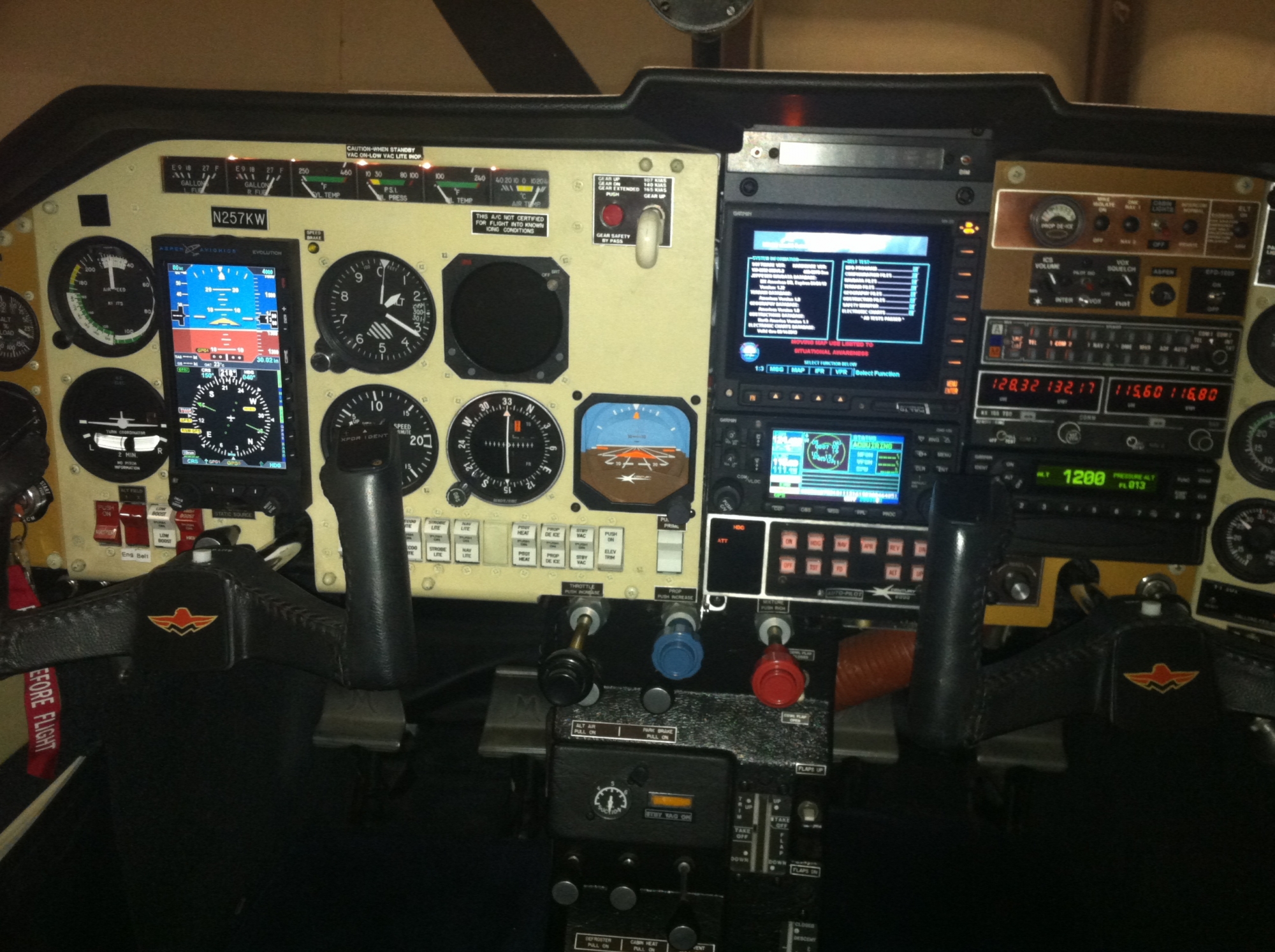
In a new policy statement, the FAA announced that electronically driven attitude indicators can directly replace vacuum-driven attitude indicators in aircraft flown under VFR and IFR. The installation can be done as a minor alteration.
Under a strict interpretation of the applicable regulations, the previous policy sometimes required installation of an independent standby attitude instrument as a backup for electronic flight instrument systems, or a vacuum system with vacuum-driven instruments to act as backups. Under the new policy, the FAA is allowing direct replacement of vacuum-driven attitude indicators with electronically driven attitude indicators because the electronic type is far more reliable.
According to the FAA, “The FAA’s Safer Skies initiative from 2001 identified vacuum system failures as a significant cause of or contributor to fatal accidents in instrument meteorological conditions (IMC). The study showed vacuum systems have a high failure rate and the failures tend to be insidious because [the devices] degrade slowly, making the potential for failure difficult to recognize. Additionally, data indicates that pilots may not have the proficiency to recover and land the airplane, in spite of instrument-rated pilots receiving partial-panel training.”
The FAA added that mean time between failure of vacuum-driven attitude indicators “is only a few hundred hours.” And vacuum pumps can fail after as little as 500 hours. “Electronically driven attitude indicators eliminate this type of failure. In addition, they provide more precise attitude indication, greater internal error-checking ability and internal redundancy, improving functionality over vacuum-driven attitude systems.”
To install the new electronic attitude indicator, some conditions must be met. These include the need for a backup and independent standby battery to power the new indicator; the new indicator must fit into the same location as the indicator it is replacing and be set to indicate level flight; only minor changes to the electrical system and vacuum connections required; and the new instrument must be powered from a new dedicated circuit breaker.


HondaJet Classic and APMG operators across the European Union can now access the latest enhancements developed for the HondaJet family following the European Union Aviation Safety Agency’s valid...
Air Tahiti has received a new ATR 72-600 equipped with ATR’s HighLine All-Business Class cabin, becoming only the second airline worldwide to introduce this premium configuration on an ATR aircr...
NetJets is elevating its premium ground experience with the introduction of new exclusive-use private terminals at Dallas Love Field (DAL), Washington Dulles International Airport (IAD) and Colorado&r...
Airbus has secured 21.J Civil Design Organisation Approval from Australia’s Civil Aviation Safety Authority (CASA), marking a significant milestone for its local operations and enhancing its abi...

