



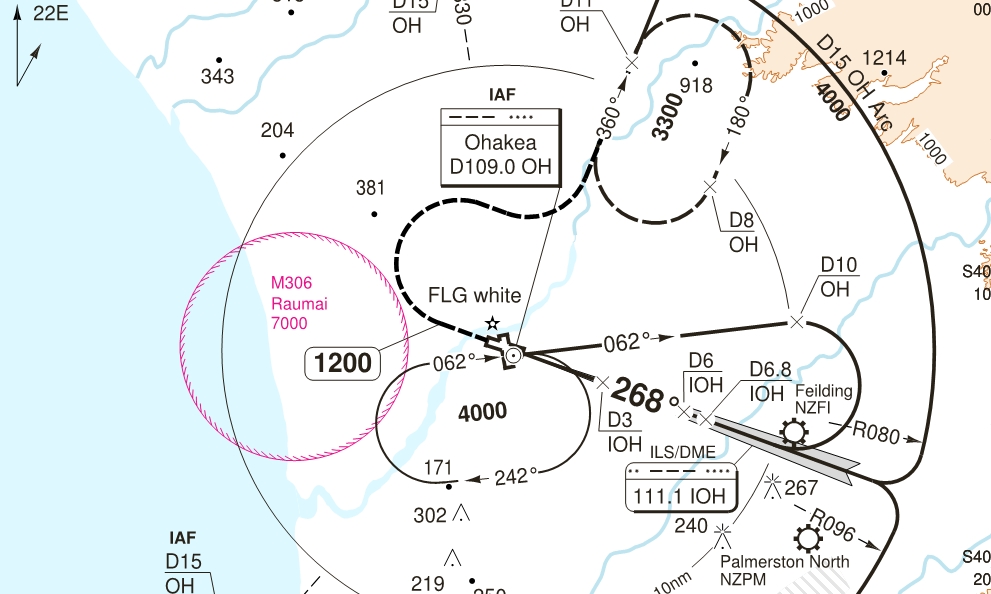
Jeppesen, a Boeing Company, has worked closely with the pilot community and leading experts to enhance its SID (standard instrument departure) and STAR (standard terminal arrival route) charts to increase situational awareness and reduce 'head-down' time while referencing chart information.
"Over the past two years, we have teamed with pilots and experts in human factors to create a new industry standard with Jeppesen SID/STAR chart design and interaction," said Mike Abbott, director, Jeppesen Data Solutions Product & Portfolio Management. "This significant change to our charts make them easier to read, reduces the likelihood of violating altitude and speed restrictions and improves the user experience with both mobile and installed electronic flight bag (EFB) platforms."
The new worldwide IFR (instrument flight rules) charts will be introduced over time, starting this December for airports in Europe and the U.S. The chart enhancements are designed to help pilots increase safety in flight and raise awareness of both physical obstacles and dangers and the regulatory environment for each procedure.
Specifically, key enhancements made to Jeppesen IFR arrival and departure charts include the addition of terrain, distinctive use of color to identify important features at a glance and true to scale depiction of chart elements. The new chart design features blue coding of altitude and magenta coloring of speed restriction details, to simplify recognition of essential arrival and departure elements.
Overall, 10 enhancements will be included in the new Jeppesen charts, including the addition of MSAs (minimum sector altitudes) within the plan view of the chart to provide a minimum clearance of objects near the airport and grid MORAs (minimum off route altitudes), providing obstacle clearance altitude within a certain longitude and latitude grid on the chart.
Jeppesen charts are derived from a comprehensive aviation database that contains more than one million records, and employs multiple stages to assure quality. Jeppesen continually takes in "source" data collected from the world's more than 220 Air Navigation Service Providers and refines and synthesizes the widely varying forms of critical data into a singular chart format. Jeppesen flight information analysts edit and verify thousands of database transactions during each International Civil Aviation Organization (ICAO) 28-day revision cycle.


Responding to rising customer interest in always-on, high-speed connectivity, Duncan Aviation has placed a prepaid order for 40 Gogo Galileo HDX systems, marking Gogo’s biggest MRO agreement thi...
AEE Aircraft Electronic Engineering GmbH and Horizon Aircraft have joined forces to integrate advanced avionics capabilities into the Cavorite X7 hybrid-electric eVTOL programme. Throug...
Desert Jet has broken ground on its long-planned ramp expansion at Jacqueline Cochran Regional Airport (KTRM), advancing a key infrastructure investment designed to accommodate rising business av...
HondaJet Classic and APMG operators across the European Union can now access the latest enhancements developed for the HondaJet family following the European Union Aviation Safety Agency’s valid...

