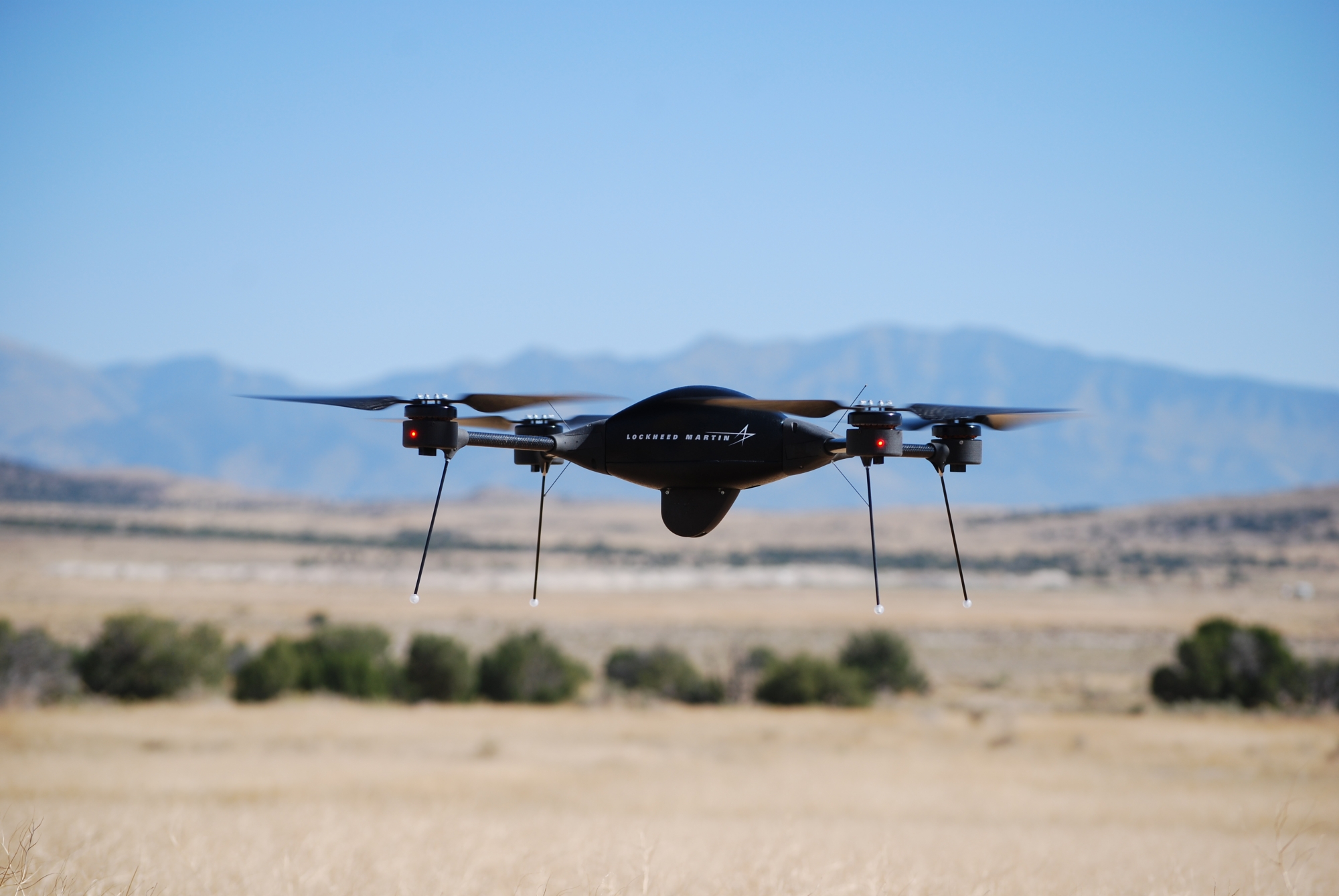

Small unmanned aircraft are finding a place for themselves within the general aviation community, even though pilots and UAS operators often butt heads over safety and regulatory concerns.
Commercial drone flights are becoming more commonplace, with the FAA granting 2,256 Section 333 exemptions to small UAS operators in the past year as it formulates new regulations.
A panel of aviation leaders at NBAA argue that commercial drones are here to stay, and the aviation businesses should embrace the “disruptive” technology and not reject it.
They say aviation service providers, particularly in the agriculture and utility sectors, could offer SUAS for airborne data collection and mapping alongside their main manned aircraft service products.
Chris Broyhill of Exelon Aviation, which operates the Dassault Falcon 2000 and 7X, is acquiring three DJI S900 quadcopters to help coordinate and speed up power restoration after damaging weather events.
“When any new technology is available in flight operations, and this has been my experience in the air force and in business aviation, you can either get in front of it or get rolled over by it,” he says.
There is concern among pilots and the general population that introducing unmanned aircraft into the national airspace could be unsafe, intrusive and even threatens jobs. Low-flying crop dusters are especially worried about the number of drones springing up in their airspace, according to the panel.
AUVSI president and chief executive Brian Wynne, however, says these tiny airborne devices can be safely integrated into the national airspace system, and their commercial potential is unlimited.
AUVSI estimates that commercial drone operations could generate $80 billion in new business in America over the next ten years, if safely integrated. Wynne and the other panelists Jonathan Downey of Airware and Paul McDuffee of Insitu say aviation service providers should get involved.
“We’re beyond the discussion of ‘hell no, we don’t want UAS in our airspace,’” Wynne says.
The FAA currently restricts SUAS flights to within visual range, and plans to publish a new rule governing unmanned aircraft weighing under 25kg (55lbs).
Archived
10 years ago


AERO 2027 will place an even stronger spotlight on the helicopter sector, building on the momentum and success of AERO 2026, organisers Fairnamic announced today. As Europe’s leading trade fair...
Air France has announced the first additions to its Summer 2027 schedule, strengthening its North American network with the launch of new nonstop services to Nashville, Tennessee, and San Diego, Calif...
AeronautX, part of the AX Aero Group, has announced the launch of a new business aviation pilot training centre in Amsterdam, scheduled to open in the first quarter of 2027. Created by business a...
NetJets is elevating its premium ground experience with the introduction of new exclusive-use private terminals at Dallas Love Field (DAL), Washington Dulles International Airport (IAD) and Colorado&r...