



NASA's Orion capsule — the spacecraft that could one day take humans to Mars — is going on an important flight today. Unfortunately it's not into space. Instead, the main structure of the vehicle is being transported from the Michoud Assembly Facility in Louisiana, where the capsule was built, to Kennedy Space Center in Florida. That's where it will live until it goes on its first uncrewed test flight on top of NASA's next big rocket, the Space Launch System.
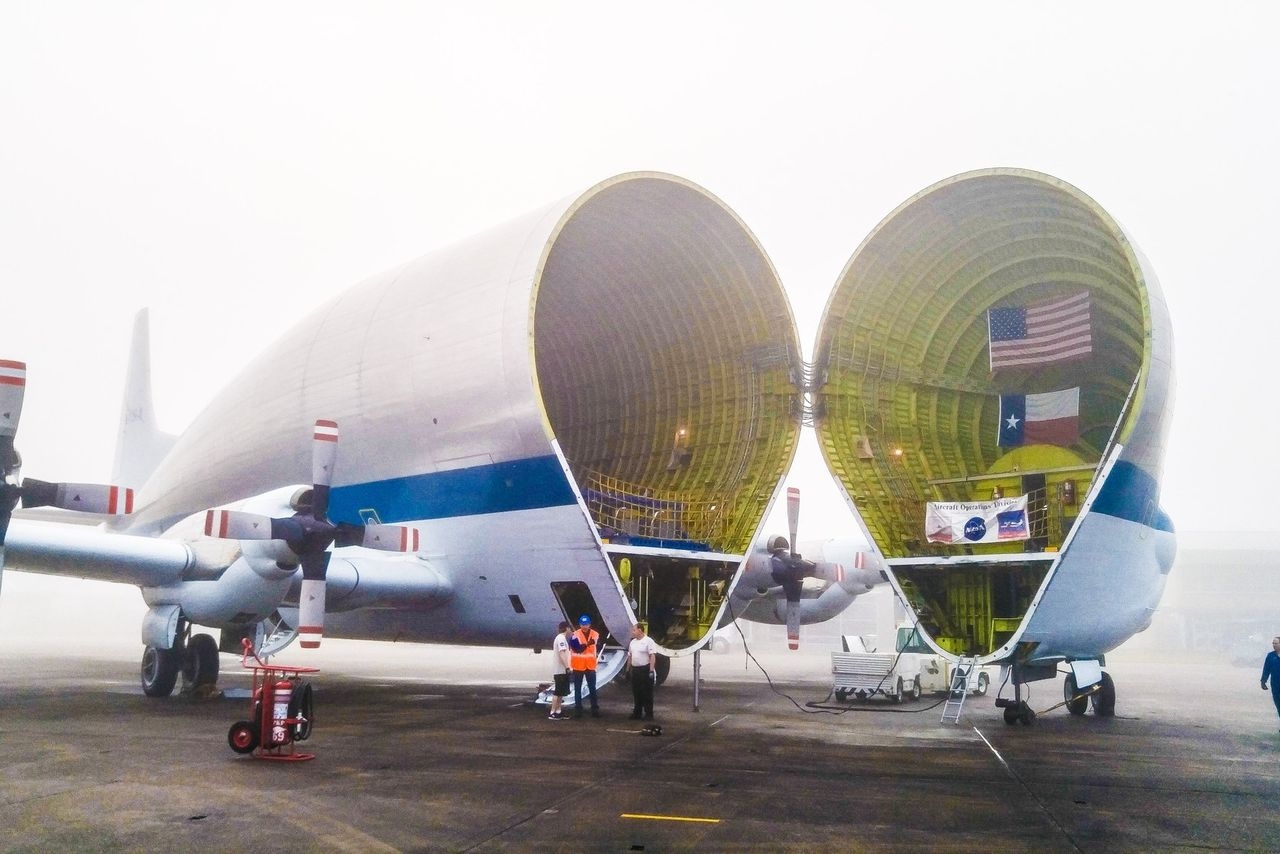
The Orion has a special ride to Kennedy called the Super Guppy. It's a giant transport plane NASA uses to lug around big cargo. Shaped like, well, a guppy, the plane is able to carry loads that weigh up to 26 tons in a cargo hold that has up to 39,000 cubic feet of usable space. NASA's Super Guppy was originally used to transport parts needed to form the International Space Space Station; the plane would carry the pieces to the sites they'd eventually launch from. Now, NASA keeps it on hand to carry oversized cargo, and the Orion definitely fits the bill, measuring about 10 feet tall and 16.5 feet in diameter.
/cdn0.vox-cdn.com/uploads/chorus_asset/file/5987671/NASA-Super-Guppy-cargo-hold-Orion.0.jpg)
View of the packed Orion from inside the Super Guppy cargo hold. (NASA)
To get the Orion inside the hold, the plane actually splits apart. The front nose can swing open and away from the rest of the plane, staying connected through hinges on one side. That hinged nose can open up to an angle of 200 degrees to allow large pieces on board. Once the cargo is loaded, the nose is reattached for flight.
Unfortunately, this is all the flying this particular Orion will do for a couple years. Its first uncrewed test flight on the SLS is slated for late 2018. And after that, it's a little unclear when the Orion will fly again. NASA says it has an "aggressive" internal goal of launching the first crewed test flight in 2021, but the official date is scheduled for no later than 2023.
/cdn0.vox-cdn.com/uploads/chorus_asset/file/5987677/NASA-Super-Guppy-flight-Orion.0.jpg)
Airbus forecasts that demand for aviation services will more than double between 2026 and 2045, exceeding US$420 billion in value. Driven by a compound annual growth rate (CAGR) of 3.8%, the sector wi...
AERO 2027 will place an even stronger spotlight on the helicopter sector, building on the momentum and success of AERO 2026, organisers Fairnamic announced today. As Europe’s leading trade fair...
Embraer and LATAM Airlines Group have signed a Component Pool Program agreement to support the airline's introduction of 24 Embraer E195-E2 aircraft. In addition to the firm order, LATAM retains o...
AeronautX, part of the AX Aero Group, has announced the launch of a new business aviation pilot training centre in Amsterdam, scheduled to open in the first quarter of 2027. Created by business a...

