



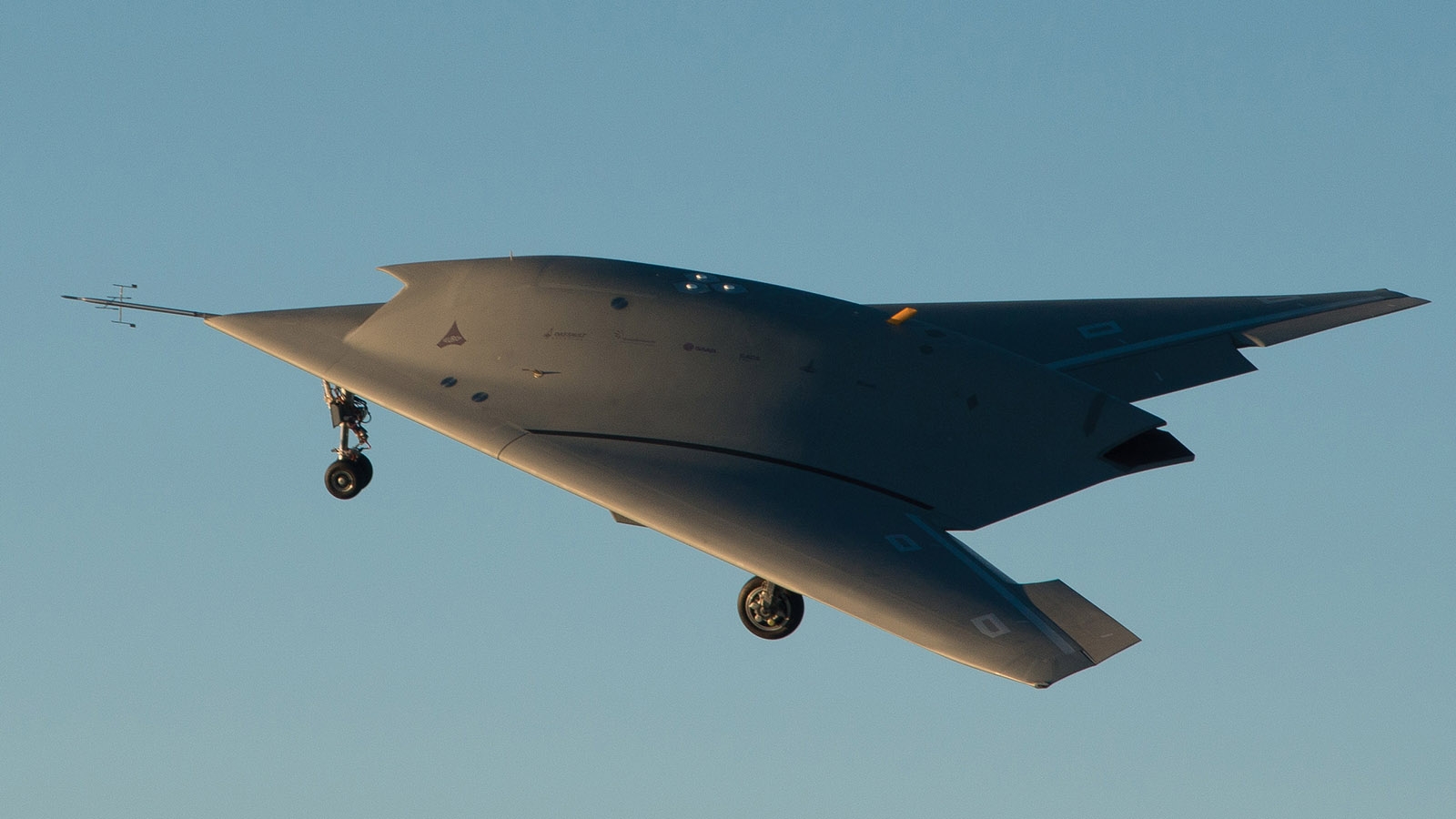
Future British military operations will require more stand-off or remotely-operated weapons to counter a spread of advanced technologies among its enemies that will make today's conflicts appear "relatively simple" by comparison, according to a Ministry of Defence research paper.
“The proliferation of technology and advanced weapons systems will provide many more states with effective anti-access and area denial capabilities that will impact on operations in every environment," says the MoD in its Future Operating Environment 2035 document.
This will demand the "innovative use" of cyber, precision and stand-off weapons, it says, "as well as stealth, layered defence and automated systems".
“Operations conducted thus far will look relatively simple compared to some of those required in the future operating environment of 2035."
As technological advances make high-altitude airspace more accessible, this is “blurring further the distinction between air and space”. Although there is presently no agreement on how far airspace extends vertically, it is typically considered that it is as high as aircraft can fly. Future aircraft will be able to reach ever higher altitudes, adding "ambiguity" to these borders, it says, potentially provoking confrontation.
“These technologies may stretch our ability to police international airspace and defend our sovereign territory from the air,” it adds.
Neuron UCAV
Alenia Aermacchi
The MoD says urban military operations in all domains “will remain fraught with difficulties”, so new ways to overcome these limitations are required.
“The scale of civil maritime, air, land and information traffic in 2035 is likely to be significant, especially if we require access to commercial ports, airports and communication nodes from which to mount further operations,” it says.
“The competition for freedom to base, operate and manoeuvre will be more challenging than today, as will the challenges and consequences of operating in future cities. This may require us to conduct more of our activity remotely, or from a stand-off location, so that we do not become embroiled in lengthy and intensive urban operations.”
The MoD will also need to track future technologies that may offer new capabilities or pose threats, it says.
Potentially beneficial developments include faster computer processing, lighter logistics chains, 3D printing and “perhaps even hypersonic strategic air-lift”, plus autonomous weapon systems such as unmanned combat air vehicles.
Air Tahiti has received a new ATR 72-600 equipped with ATR’s HighLine All-Business Class cabin, becoming only the second airline worldwide to introduce this premium configuration on an ATR aircr...
MySky, the spend and revenue management platform trusted by operators of more than 2,000 business aircraft worldwide, announced the launch of MySky Pay at NBAA-BACE 2026, introducing a purpo...
EVIA AERO and Fabspace Hangars are addressing one of aviation’s most pressing infrastructure challenges: the shortage of hangar capacity across Europe. Through their partnership, EVIA AERO now o...
Embraer and LATAM Airlines Group have signed a Component Pool Program agreement to support the airline's introduction of 24 Embraer E195-E2 aircraft. In addition to the firm order, LATAM retains o...

