



A BILLION DOLLAR COMMITMENT
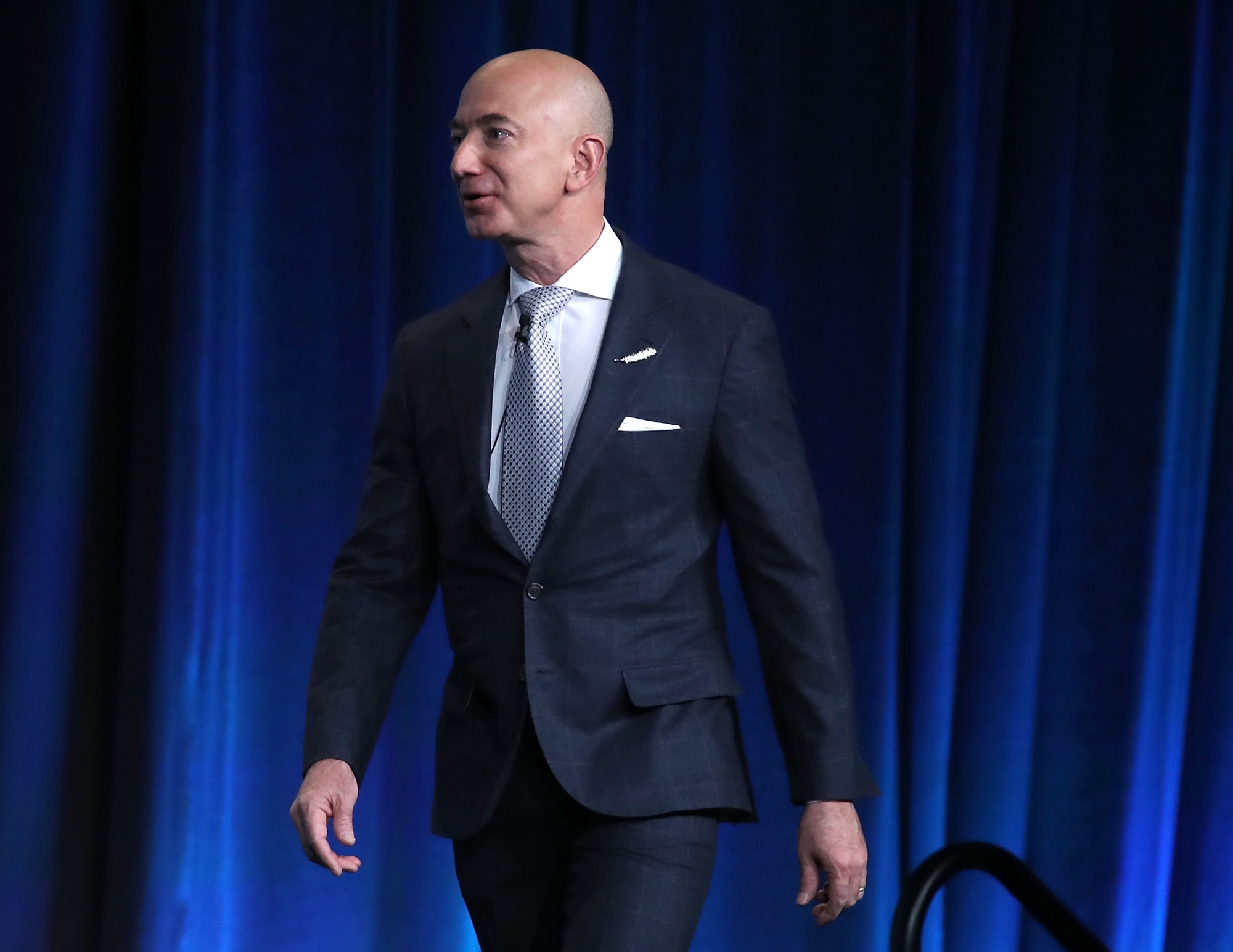
On Wednesday, April 5, Jeff Bezos, founder and CEO of Amazon , revealed that he is financing Blue Origin, his space company, by selling approximately $1 billion in Amazon stock annually. He made the announcement as he stood before the full-scale mock capsule of his New Shepard rocket, emphasizing his vision for a future that includes millions of humans playing, working, and living in space.
The reusable New Shepard rocket will take six people up into space for stunning panoramic views of our home world, and possibly some tumbling around to enjoy weightlessness. On the return to the ground and reality, the travelers will endure 5 Gs of pressure and eventually slow to a comfortable 5 km per hour (3 miles per hour) before touching down.
Bezos said he wasn’t yet sure how much passengers would pay, but said that as spaceflight becomes more common, ticket prices will decline.
The capsule and the rocket booster are both reusable to make New Shepard’s trips more economical. “Reusability is the key to getting millions of people living and working in space,” said Bezos at the press conference.
Both Bezos and SpaceX's Elon Musk have zeroed in on reusability as an essential component of an economically accessible space age. Bezos believes that his investment into lowering the entry costs of going into orbit will lead to a “golden age of space exploration.”
ROCKET REUSABILITY
Not everyone working in the space industry believes in the importance of reusability. In July 2016, the majority of a discussion panel concluded that reusability was not as key to lowering costs as Musk has claimed in the past. However, as noted by Ars Technica, the panel was composed only of people who were not in the reusable market — the “old-guard perspective.”
In contrast, new space companies like Blue Origin and SpaceX have pushed reusability based on the idea that there exists a hard limit on economical space activity due to high launch costs. Reducing these costs brings more people to the table, which prompts more innovation, which again reduces costs. This clash in thought between new space innovators, like Bezos and Musk, and the more traditional space establishment is a predictable, perhaps unavoidable, result of our current transitional state of space exploration: from government-run to market-driven.
“If we can make access to space low-cost, then entrepreneurs will be unleashed,” Bezos said to reporters. “You will see creativity, you will see dynamism, you will see the same thing in space that I’ve witnessed on the internet in the last 20 years.”
With his current level of investment into Blue Origin and reusable spacecrafts, Bezos stands a good chance of attracting the right talent and fostering innovation — both of which are critical to ensuring that his long-term vision for the future eventually morphs into reality.
AeronautX, part of the AX Aero Group, has announced the launch of a new business aviation pilot training centre in Amsterdam, scheduled to open in the first quarter of 2027. Created by business a...
HondaJet Classic and APMG operators across the European Union can now access the latest enhancements developed for the HondaJet family following the European Union Aviation Safety Agency’s valid...
At Marrakech Airshow 2026, Bell Textron Inc. announced AVIARAIL as its new authorized independent sales representative for Morocco, reinforcing its commercial footprint and enhancing engagement with c...
Deutsche Aircraft is advancing the next chapter of regional aircraft manufacturing in Europe with the construction of a new production facility at Leipzig/Halle Airport. To support the site's...

