



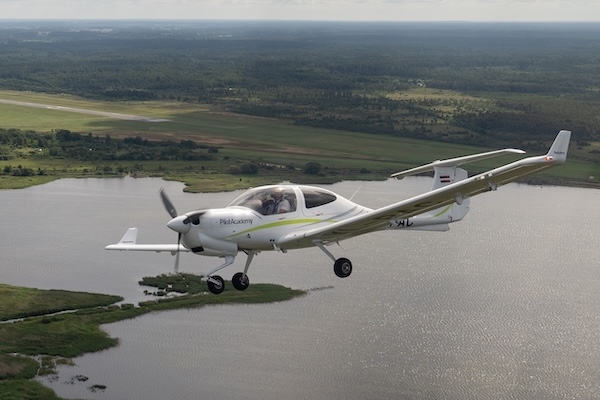
airBaltic Training launched a Flight Data Monitoring programme in cooperation with FlySto, thus further supporting safer, more effective, and data-driven pilot training. While FDM has long been used by commercial airlines, its implementation within pilot training organisations remains less common. By introducing this capability, airBaltic Training continues to strengthen its proactive approach to safety management and training excellence. FDM allows flight data from training aircraft to be collected and reviewed in order to better understand how training flights are performed. For airBaltic Training, this means instructors can use objective flight data to identify trends, support student development, and further improve the quality and consistency of pilot training.
Beyond fleet-wide trend analysis, FlySto is also enhancing individual pilot performance with leading-edge debriefing capabilities. By transforming raw flight data into intuitive, high-fidelity 3D visualizations and interactive dashboards, the platform empowers student pilots and their instructors to conduct precise, objective, and comprehensive post-flight reviews directly on their mobile devices.
Vilmantas Mažonas, CEO of airBaltic Training commented: “Safety is at the heart of everything we do in aviation training. By introducing Flight Data Monitoring together with FlySto, we are taking another important step in strengthening our safety culture and improving the quality of pilot training. The programme allows us to learn from real flight data, identify trends earlier, and provide even more valuable feedback to both instructors and students.”
Patrick Lienhart, Pilot/Co-founder FlySto stated: “FlySto’s innovative and intuitive flight data platform and a forward-thinking organisation like airBaltic Training are the perfect match. Together, we are bridging the gap between fleet-wide safety management and individual, data driven, pilot self-improvement – transforming complex flight data from a reactive metric into a proactive, everyday asset starting from a pilot's very first flight. This represents the next generation of Flight Data Monitoring and Flight Operational Quality Assurance, making flight data more accessible, actionable, and valuable for every pilot."
The programme supports several key safety and training objectives, including the identification of potential risks and emerging trends, review of training flight performance, improvement of training effectiveness, support for safety reviews and occurrence investigations, and the continuous improvement of safety across training operations.
The programme has been implemented in accordance with Just Culture principles. Measures have been established to ensure the confidentiality, protection, and appropriate use of FDM data. Information obtained through FDM is used only for safety improvement, risk identification, trend monitoring, training enhancement, and occurrence investigation purposes.
At Marrakech Airshow 2026, Bell Textron Inc. announced AVIARAIL as its new authorized independent sales representative for Morocco, reinforcing its commercial footprint and enhancing engagement with c...
EVIA AERO and Fabspace Hangars are addressing one of aviation’s most pressing infrastructure challenges: the shortage of hangar capacity across Europe. Through their partnership, EVIA AERO now o...
Phenix Jet Cayman has added a Bombardier Global 8000 to its managed fleet, successfully completing the aircraft's CAACI registration transfer and entry into service in less than five business days...
When a vehicle assembly line is at risk of running out of critical components, every minute of downtime carries a significant cost. In many cases, an emergency air charter is not the expensive option,...

