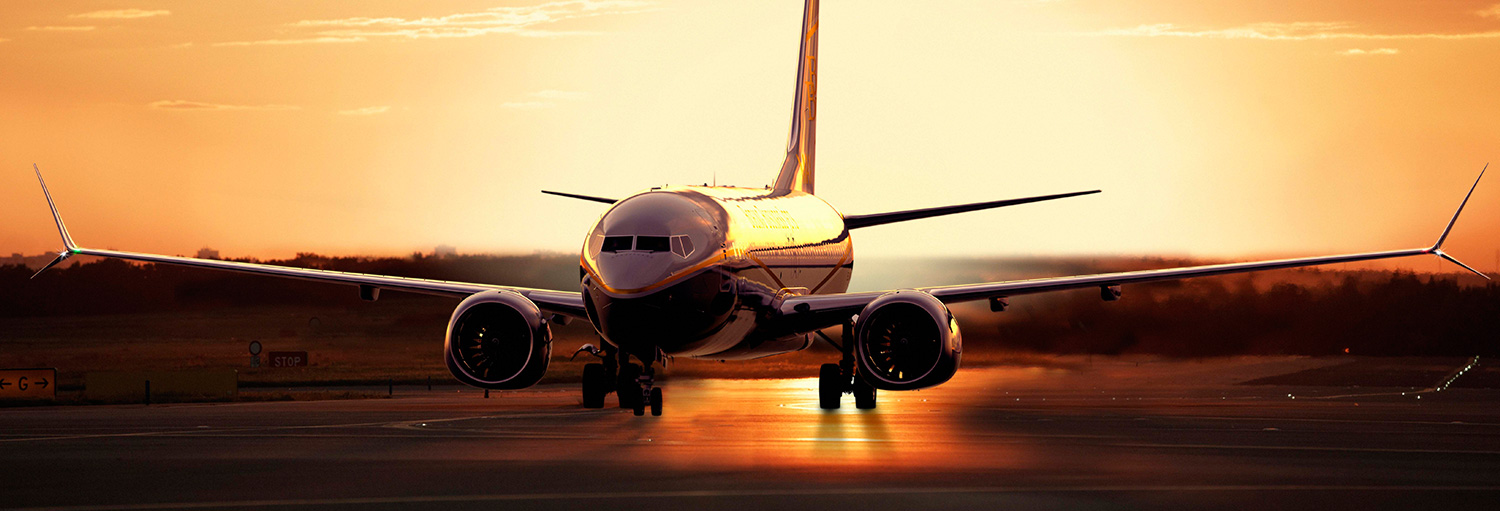
Boeing Business Jets unveiled the BBJ MAX 7, the newest addition to the BBJ fleet. The BBJ MAX 7 has a range of up to 7,000 nautical miles, opening up key city pairs between Asia, the Middle East and the United States.
The BBJ MAX 7 is longer than the original BBJ, providing more space in the cabin while also creating additional volume for cargo in the lower lobe. Because of its new, more fuel-efficient LEAP-1B engines, the BBJ MAX 7 has reduced fuel burn and emissions and requires less cargo volume be reserved for auxiliary fuel tanks, regardless of mission length.
“We are thrilled to introduce the BBJ MAX 7 to the market,” said David Longridge, president, Boeing Business Jets. “We know customers are going to love this airplane. In terms of range, cabin space, cargo volume and operating economics, the BBJ MAX 7 cannot be beat.”
The BBJ MAX 7 inherits all of the features of the already launched BBJ MAX 8 and BBJ MAX 9, including an updated flight deck, improved aerodynamics, reduced noise profile, and fly-by-wire spoilers. Despite being larger and more capable than the current BBJ, the new MAX 7 has the lowest operating costs of any Boeing Business Jets aircraft.
Boeing Business Jets has 11 BBJ MAX 8s on order, one BBJ MAX 9 and has already seen strong interest in the BBJ MAX 7.
“We are in active discussions with more than ten customers for the BBJ MAX 7 and we are just getting started,” said Longridge. “We are very confident that the BBJ MAX 7 will be a very successful business jet and we are excited to introduce the airplane to our customers.”
Archived
9 years ago


Bombardier will return to the 2026 NBAA Business Aviation Convention & Exhibition with a showcase that highlights the company's flagship aircraft, award-winning customer support network and di...
Desert Jet has broken ground on its long-planned ramp expansion at Jacqueline Cochran Regional Airport (KTRM), advancing a key infrastructure investment designed to accommodate rising business av...
Airbus forecasts that demand for aviation services will more than double between 2026 and 2045, exceeding US$420 billion in value. Driven by a compound annual growth rate (CAGR) of 3.8%, the sector wi...
EVIA AERO and Fabspace Hangars are addressing one of aviation’s most pressing infrastructure challenges: the shortage of hangar capacity across Europe. Through their partnership, EVIA AERO now o...