



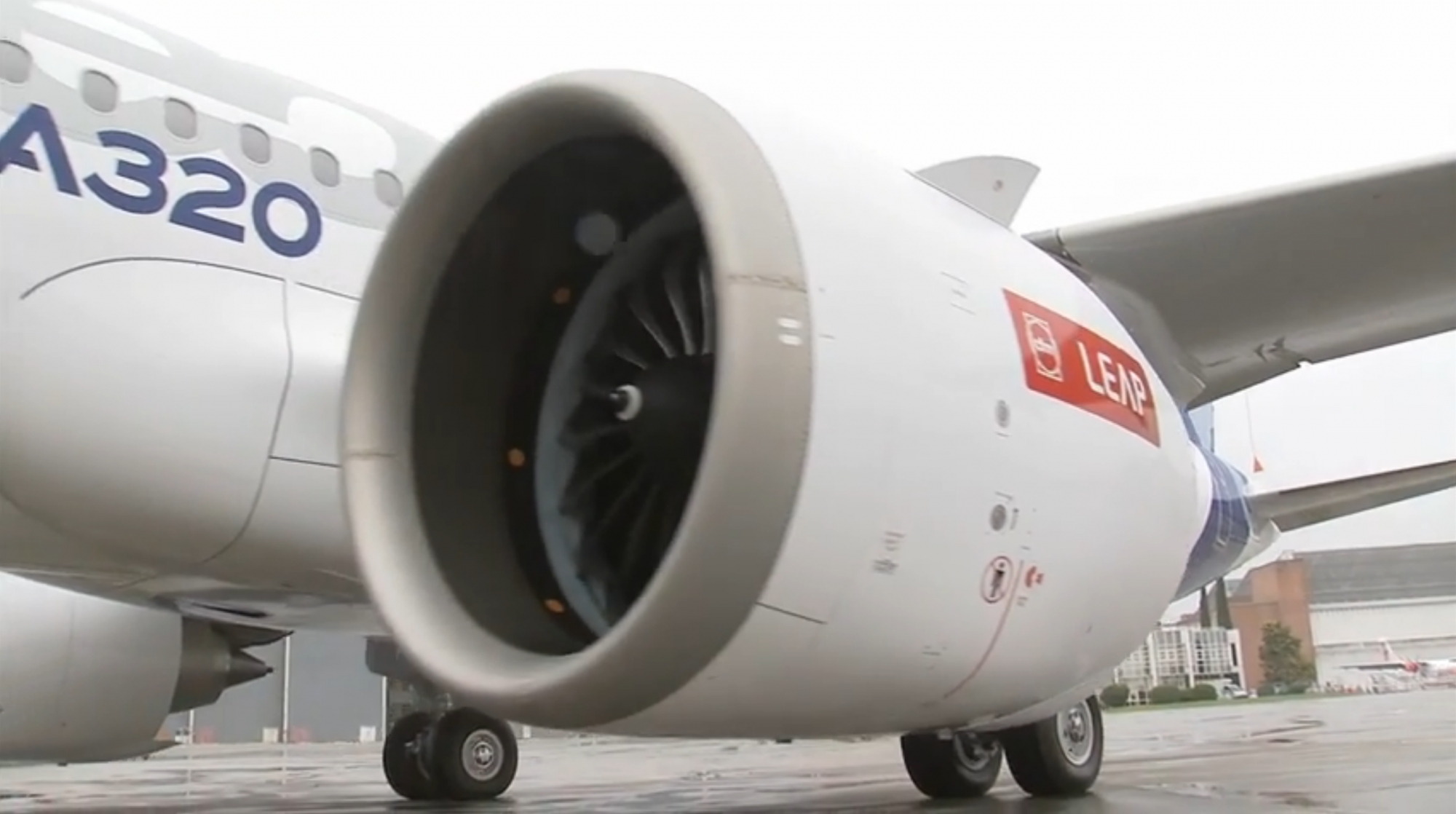
Start-up times are not a problem for the Leap-1A engine nearing entry into service in mid-2016 for the Airbus A320neo, manufacturer CFM International says.
Each of the two Leap-1A engines installed on an A320neo need 50s to spool-up after the activation sequence is started, says CFM executive vice-president Allen Paxson, speaking on a teleconference with journalists on 5 February.
That timing comes within “a handful of seconds” of the CFM56 engine that the Leap-1A replaces on the A320 family, he adds.
It also appears to contrast with the start-up time requirement for the first batch of Pratt & Whitney PW1100G engines, CFM’s rival for orders on the A320neo.
In December, Airbus delayed entry into service of the A320neo by one month after original launch customer Qatar Airways objected to the start-up time requirement for the PW1100G engine. Lufthansa accepted the first A320neo and launched service in late-January.
Meanwhile, P&W parent United Technologies has said the excess start-up timing requirement on early engines is needed to prevent components in the engine from over-heating.
A hardware and software upgrade is expected to be ready this month PW1100Gs now in final assembly. Those engines will likely begin entering service on delivered A320neos beginning early in the second quarter.
CFM officials are keen to distance the upcoming Leap-1A from such concerns. Their engine is scheduled to enter service on the A320neo in mid-2016.
The Leap-1A engine was designed in a way that minimises the start-up time requirement, says CFM executive vice-president Francois Bastin. Key electronics are located near the front of the engine close to the fan, which means they are installed in a “cooler environment”, he says.
“That's taken into account in the very early stages of the design,” he adds.
CFM remains on track to deliver the first production version of the Leap-1A soon to Airbus for installation on a production A320neo. Test cell data has confirmed the engine meets Airbus and customer specifications, Bastin says.
The Leap-1B engine for the Boeing 737 Max 8 cleared a major milestone on 29 January with the first flight of the initial test aircraft. That engine remains “projected to be on spec” by the 737 Max 8’s scheduled entry into service in 2017, Bastin says.
CFM also has delivered the first two Leap-1C engines to Comac, which were shown installed on the C919 during a roll-out event in November. Those engines are ready to fly when Comac is ready. The C919 is scheduled to begin flight tests in 2016.
Air France has announced the first additions to its Summer 2027 schedule, strengthening its North American network with the launch of new nonstop services to Nashville, Tennessee, and San Diego, Calif...
From Learjets and Challengers to turboprops such as the Pilatus PC-12, different aircraft bring different capabilities to a medical flight. Sebastian Demiet, COO of MTI 24/7, explains why aircraft sel...
Embraer and LATAM Airlines Group have signed a Component Pool Program agreement to support the airline's introduction of 24 Embraer E195-E2 aircraft. In addition to the firm order, LATAM retains o...
AERO 2027 will place an even stronger spotlight on the helicopter sector, building on the momentum and success of AERO 2026, organisers Fairnamic announced today. As Europe’s leading trade fair...

