



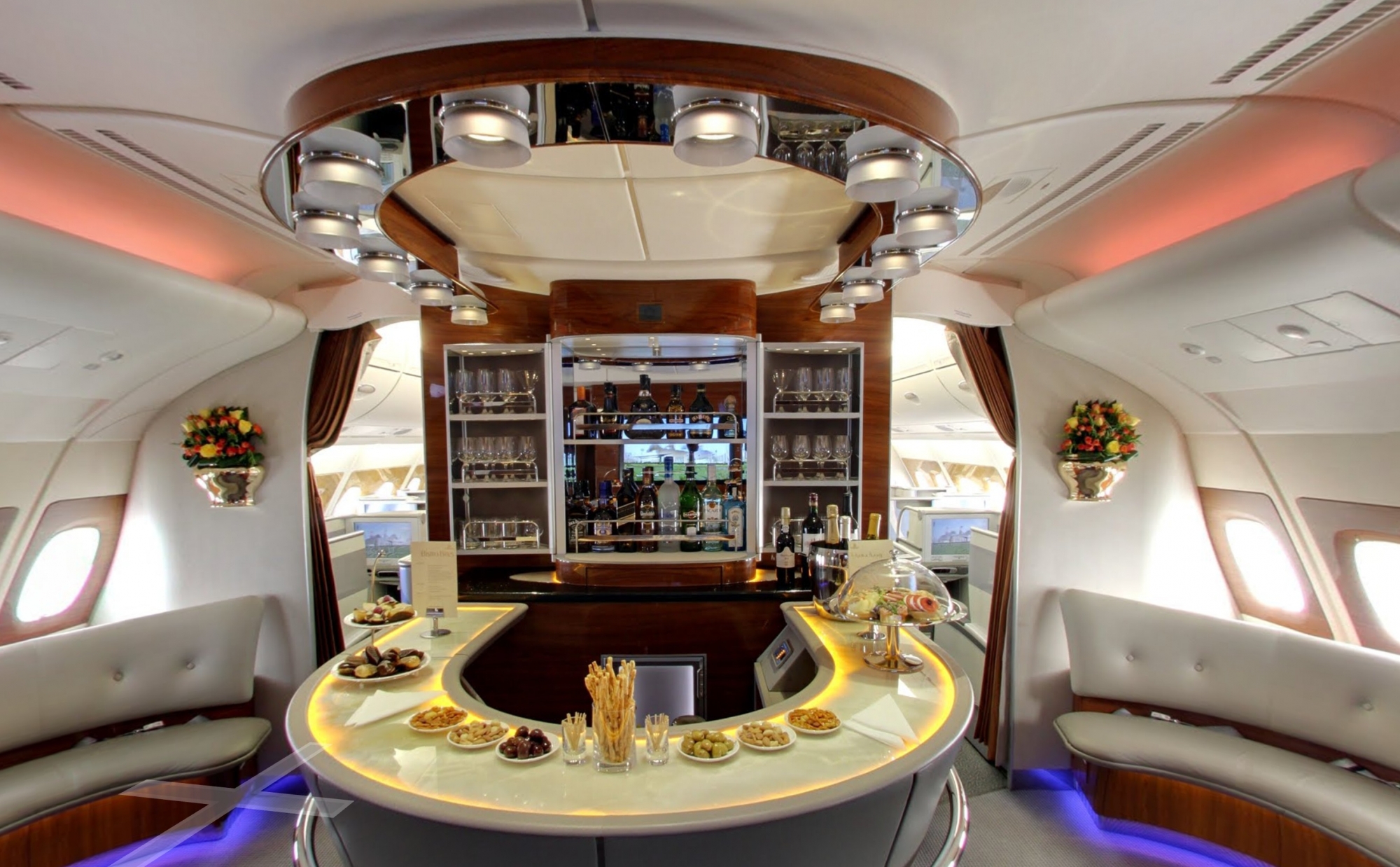
It has been just 10 years since Airbus launched its A380, the world’s largest passenger aircraft. When the super-jumbo made its first commercial flight in 2005, it was viewed as the future of air travel. The double-decker allowed airlines to carry more people without buying extra landing slots at increasingly congested airports.
The Gulf’s three biggest airlines – Emirates, Etihad Airways and Qatar Airways – all operate the superjumbo. Emirates in particular has made the A380 the backbone of its fleet, with about 65 in operation and more than 70 on order. Qatar and Etihad have together bought 20. But there have been no new orders since 2012.
When Airbus designed the A380, it predicted that more people would want to travel between large airport hubs. Its rival Boeing instead bet that fuel efficiency was key as people would want to fly to many new destinations direct. So while Airbus concentrated on the super-jumbo, Boeing developed the 787 – a smaller, more efficient airliner than can still fly long distances.
Airlines consider the A380 expensive – it needs special gates at airports and burns massive amounts of fuel, which is the the largest component of a carrier’s costs. With that in mind, the Emirates president, Tim Clark, has said he is ready to buy up to 200 more A380s – if a more fuel-efficient model is introduced.
Airbus has instead hinted at the possibility of discontinuing the A380 programme altogether, though in November, Fabrice Brégier, the company’s chief executive, said that he still expected to meet a target of selling 25 of the jets this year. He also said there was “no urgency” to build a more fuel-efficient version because of the low oil price. “I think we need to catch more customers,” he said.
With the continued production of Boeing’s long-flying “Queen of the Skies” 747 facing its own scrutiny, the year ahead may prove a last gasp for the jumbo jet.
HondaJet Classic and APMG operators across the European Union can now access the latest enhancements developed for the HondaJet family following the European Union Aviation Safety Agency’s valid...
The Board of Directors of Costruzioni Aeronautiche Tecnam S.p.A. has unanimously appointed Giovanni Pascale Langer as Chief Executive Officer, while Paolo Pascale Langer, who...
Airbus forecasts that demand for aviation services will more than double between 2026 and 2045, exceeding US$420 billion in value. Driven by a compound annual growth rate (CAGR) of 3.8%, the sector wi...
International air charter specialist Chapman Freeborn has joined BlackBook Motorsport, the global business network connecting key stakeholders across Formula 1, NASCAR, MotoGP and the wider internatio...

