



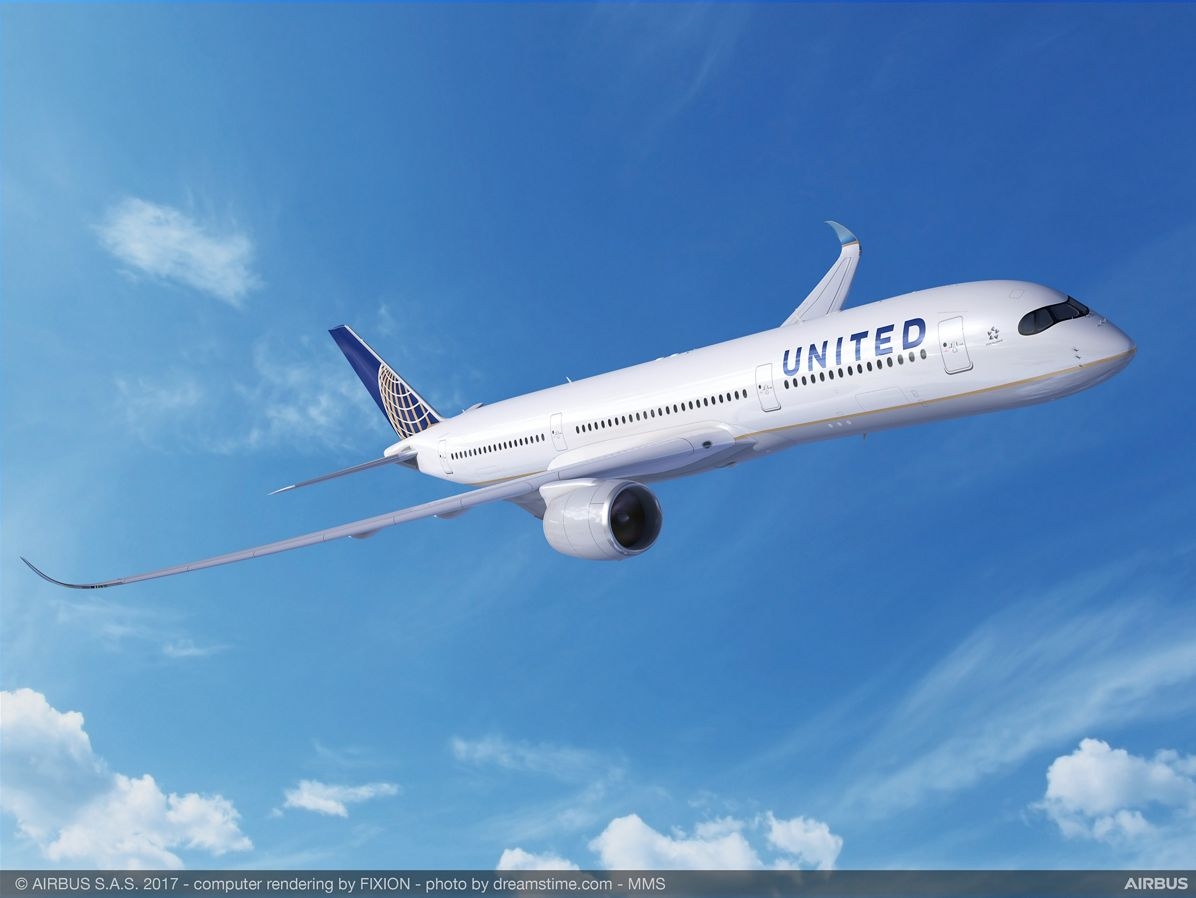
Long-time customer grows future with Airbus, changes models
United Airlines has increased the number of A350 XWB aircraft it will bring into its fleet, updating and expanding its previously existing order for 35 A350-1000 to 45 A350-900 widebody aircraft to replace older, less efficient aircraft, supporting future growth at the airline.
The A350-900 is the cornerstone member of the A350XWB (Xtra Wide-Body) family, which is shaping the future of air travel. The aircraft typically seats 325 passengers in a standard three-class configuration and features state-of-the-art comfort and amenities, offering an exclusive flight experience to passengers on board with the new Airspace by Airbus cabin. The A350-900’s unique combination of payload and true long-range range capabilities makes it an ideal aircraft for United Airlines’ international route system. These aircraft will be the first Airbus widebodies to join United’s global fleet.
“For the past year, United has done a complete review to ensure that we have the right long-term fleet strategy, and it was clear that the A350 aligns with our replacement needs and our network,” said Andrew Levy, Chief Financial Officer of United Airlines. “The combination of the range performance and efficiencies make the A350 an attractive aircraft for United.”
“This updated and expanded order is a strong reaffirmation of the A350 XWB Family,” said John Leahy, Chief Operating Officer – Customers. “United and Airbus have had a long and strong partnership for many years, and we’ve worked together to ensure their requirements for the future are met, if not exceeded. The airline’s decision to grow its widebody fleet with, for the first time, a widebody model from Airbus, shows they know that the A350 will meet their financial and performance demands, while pleasing their customers who will enjoy the quietest and most comfortable cabin in its class.”
The A350 XWB is the world’s newest and most efficient twin-aisle airliner, featuring the latest aerodynamic design, carbon fiber fuselage and wings, plus new fuel-efficient Rolls-Royce engines. Together, these latest technologies translate into unrivalled levels of operational efficiency, with a 25 percent reduction in fuel burn and emissions, and significantly lower maintenance costs.
The 100th A350 was delivered at the end of July 2017, just some 30 months after the first delivery of the world’s most modern widebody aircraft in December 2014. To date*, Airbus has recorded a total of 848 firm orders for the A350 XWB from 45 customers worldwide.
From Learjets and Challengers to turboprops such as the Pilatus PC-12, different aircraft bring different capabilities to a medical flight. Sebastian Demiet, COO of MTI 24/7, explains why aircraft sel...
Bombardier will return to the 2026 NBAA Business Aviation Convention & Exhibition with a showcase that highlights the company's flagship aircraft, award-winning customer support network and di...
Marking a significant industry milestone, Garmin has delivered its 1,000th G1000 integrated flight deck retrofit for a King Air aircraft. The program has helped redefine cockpit modernizatio...
EVIA AERO and Fabspace Hangars are addressing one of aviation’s most pressing infrastructure challenges: the shortage of hangar capacity across Europe. Through their partnership, EVIA AERO now o...

