



FACC is anchoring safety awareness even more strongly in the training and further education of the entire workforce. The numbers speak for themselves: Aircraft are the safest means of transport in the world. For example, flying is about 20 times safer than traveling by train, 1,200 times safer than using a car, or 10,000 times safer than using a motorcycle. This is because the entire aviation industry has established strict safety and quality standards since many decades, which always put the safety of passengers first. Aviation safety is understood as a holistic approach that encompasses safe operations, processes and technologies, from aircraft manufacturing and maintenance to ongoing operations.
CEO Robert Machtlinger commented: "For over 35 years, with its products and solutions, FACC has been contributing to making flying the safest means of transport in the world today. With the new FACC Safety Center, we are anchoring the topic of safety even more firmly in the training and continuing education of our crew, making us one of the forerunners among suppliers to the international aviation industry worldwide."

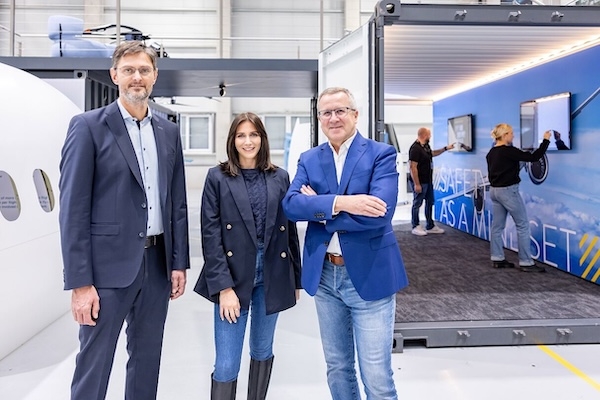
In order to further strengthen the aspect of safety in the training and further education of the entire workforce in the future, the FACC Safety Center as a new training and test area for the topic of safety has been built in the FACC Academy in recent months and has now been put into operation. Employees are given a deep understanding of the importance of safety through specific case studies and interactive training content. The focus is on raising awareness for the responsibility of each individual employee, who can contribute to even greater safety beyond existing standards. Emphasizing an open culture of communication and a “just culture” is also an essential part of the training concept. This is because people, as the “human factor,” control and monitor all processes and are therefore the decisive element in improving safety in aviation.
While the focus of manufacturing and maintenance companies has so far been on the conformity of products and processes, in recent years the aspect of safety has been emphasized even more strongly and systematic safety management has been added. Development and production organizations such as FACC take on more responsibility for the topic of safety and systematically evaluate safety-relevant influences, such as human factors, the ability to work in a team and many more. In doing so, they go beyond the fulfillment of existing approval criteria and safety standards.
From Learjets and Challengers to turboprops such as the Pilatus PC-12, different aircraft bring different capabilities to a medical flight. Sebastian Demiet, COO of MTI 24/7, explains why aircraft sel...
Air France has announced the first additions to its Summer 2027 schedule, strengthening its North American network with the launch of new nonstop services to Nashville, Tennessee, and San Diego, Calif...
Information Design One AG, the Frankfurt-based aviation technology company behind the aFuel platform, has achieved a major operational milestone. During the first half of 2026, aFuel processed 50...
Airbus forecasts that demand for aviation services will more than double between 2026 and 2045, exceeding US$420 billion in value. Driven by a compound annual growth rate (CAGR) of 3.8%, the sector wi...

